

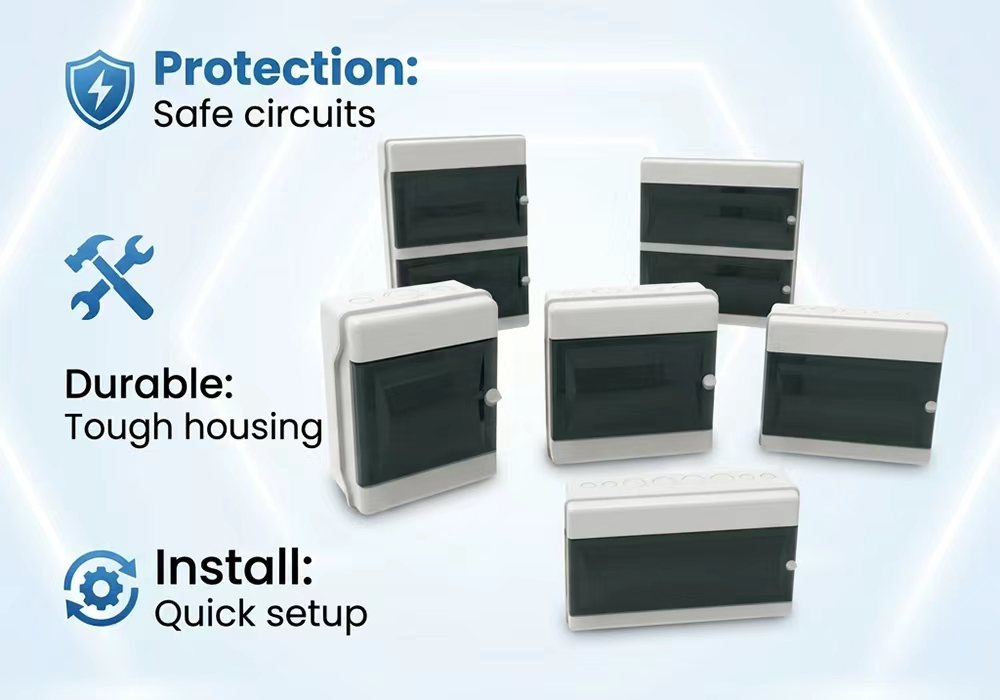
The common materials for distribution boxes are divided into three categories: cold-rolled steel plates, stainless steel, and plastic, each suitable for different usage environments. The cold-rolled steel plate box body has high strength, is convenient for forming and processing, and has a moderate cost. After the surface is treated with powder coating, it is rust-proof and insulating. It is mostly used in indoor computer rooms and building power distribution, and can resist general bumps and protect the internal switch components. It is the most commonly used power distribution shell. Stainless steel is highly resistant to corrosion and moisture, with outstanding water and rust prevention capabilities. It is suitable for outdoor, basement, chemical workshop and other damp or corrosive gas environments. It is less prone to rust and aging, and has a longer service life. 304 stainless steel is the most widely used, while 316 stainless steel can be used in high salt spray environments by the sea. Plastic distribution boxes are generally made of ABS or PC materials, which have excellent insulation performance, are lightweight, not easy to conduct electricity, and have high safety. They are suitable for household and temporary power distribution on construction sites and can effectively prevent electric shock. However, they have weak impact resistance and cannot withstand heavy external forces. The core functions of different materials are all to carry electrical components, isolate electrical bodies, prevent accidental contact by personnel, and at the same time be dust-proof and water-proof to ensure the stable operation of the power distribution system. The selection should be determined based on the on-site temperature, humidity and corrosion conditions.
Post time: Sep-15-2026