1. Introduction
In the intricate web of modern electrical and electronic systems, voltage stability stands as a fundamental pillar of reliable operation. Fluctuations in voltage, whether transient spikes, sustained overvoltage, or dangerous undervoltage, pose significant threats to equipment integrity, operational efficiency, and even human safety. Voltage protectors, also known as surge protectors or voltage regulators in specific contexts, have emerged as indispensable components designed to mitigate these risks. This article aims to provide a comprehensive analysis of voltage protectors, delving into their underlying working principles, multifaceted functions, and diverse applications across residential, commercial, industrial, and specialized sectors. By exploring the technical nuances, design considerations, and real-world implementations, this piece seeks to offer valuable insights for engineers, technicians, system designers, and anyone involved in the maintenance and optimization of electrical systems.
2. Fundamental Principles of Voltage Protectors
2.1 Definition and Core Objective
A voltage protector is an electrical device engineered to safeguard electrical circuits, equipment, and appliances from damage caused by abnormal voltage conditions. Its core objective is to maintain voltage within a safe operating range, diverting excess voltage away from sensitive components, blocking harmful fluctuations, or isolating the circuit when voltage deviations exceed acceptable limits. Unlike voltage regulators, which actively maintain a constant output voltage, voltage protectors primarily act as defensive mechanisms, responding to voltage anomalies to prevent immediate or long-term damage.
2.2 Key Electrical Concepts Underpinning Operation
To understand the principles of voltage protectors, it is essential to grasp three foundational electrical concepts: voltage tolerance, transient voltage, and impedance matching. Voltage tolerance refers to the range of voltage values that a device can withstand without performance degradation or damage. Most electronic devices, for instance, have a voltage tolerance of ±10% of their rated voltage (e.g., a 120V appliance can safely operate between 108V and 132V). Transient voltage, often called a voltage spike or surge, is a short-duration (microseconds to milliseconds) increase in voltage significantly above the rated value. Common causes include lightning strikes, power grid switching, and electromagnetic interference (EMI). Impedance matching, meanwhile, ensures that the voltage protector interacts with the circuit in a way that minimizes signal loss and maximizes protection efficiency, particularly in high-frequency applications.
2.3 Working Mechanisms of Voltage Protectors
Voltage protectors employ various working mechanisms depending on their type, application, and the nature of voltage anomalies they are designed to address. The following are the most prevalent mechanisms:
2.3.1 Shunting (Diverting) Excess Voltage
This mechanism is widely used in surge protectors (SPDs) and metal oxide varistors (MOVs). The protector acts as a high-impedance component under normal voltage conditions, allowing current to flow through the circuit unimpeded. When a voltage spike occurs, the protector’s impedance drops dramatically, creating a low-resistance path that diverts the excess current to the ground. Metal oxide varistors (MOVs) are the most common components using this mechanism. An MOV consists of a ceramic material composed of metal oxides (e.g., zinc oxide) sandwiched between two electrodes. At normal voltage, the MOV’s resistance is very high (megaohms), but when the voltage exceeds a predetermined threshold (clamping voltage), the material undergoes a phase change, reducing resistance to a few ohms and diverting the surge current.
2.3.2 Clamping Voltage to a Safe Level
Clamping mechanisms limit the voltage across a circuit to a predefined safe value, preventing it from exceeding the device’s voltage tolerance. Silicon avalanche diodes (SADs) and transient voltage suppressors (TVSs) are typical components using this principle. A TVS diode operates similarly to a regular diode under normal conditions, allowing current to flow in the forward direction and blocking it in the reverse direction. However, when the reverse voltage exceeds the diode’s breakdown voltage, the TVS enters the avalanche region, conducting large amounts of current and clamping the voltage to a stable level (clamping voltage). Unlike MOVs, TVSs have faster response times (nanosecond range) and more precise clamping characteristics, making them suitable for sensitive electronic equipment such as microprocessors and communication devices.
2.3.3 Isolating the Circuit During Abnormal Conditions
Some voltage protectors, such as overvoltage/undervoltage relays and circuit breakers, operate by isolating the load from the power source when voltage deviations persist beyond a safe period. These devices monitor the input voltage continuously. If the voltage rises above the overvoltage threshold or drops below the undervoltage threshold for a specified duration (delay time), the relay or circuit breaker triggers, opening the circuit and cutting off power to the load. This mechanism is crucial for protecting equipment from sustained voltage anomalies, which can cause overheating, insulation degradation, or component failure. For example, in industrial motors, sustained undervoltage can lead to increased current draw, overheating, and motor burnout, while overvoltage can damage windings and insulation.
2.3.4 Filtering Out Voltage Ripples and Noise
Voltage protectors used in power supplies and sensitive electronic systems often incorporate filtering mechanisms to eliminate voltage ripples and electromagnetic noise. These filters typically consist of capacitors, inductors, and resistors arranged in low-pass, high-pass, or band-pass configurations. Capacitors absorb voltage fluctuations by storing electrical energy during voltage peaks and releasing it during troughs, while inductors oppose changes in current, smoothing out rapid current variations that cause voltage ripples. This filtering mechanism is essential for maintaining stable power supply to sensitive components such as microcontrollers, sensors, and audio/video equipment, where voltage noise can lead to signal distortion, data corruption, or operational errors.
2.4 Components of Voltage Protectors
Voltage protectors are composed of several key components that work together to achieve protection. The primary components include:
- Protection Components: These are the core elements responsible for detecting and mitigating voltage anomalies. Examples include MOVs, TVSs, SADs, gas discharge tubes (GDTs), and varistors. GDTs, for instance, are used in high-voltage applications (e.g., power lines) and operate by ionizing a gas-filled tube when the voltage exceeds a threshold, creating a low-resistance path to ground.
- Sensing and Control Circuitry: This component monitors the input voltage and triggers the protection mechanism when anomalies are detected. It typically includes voltage dividers, comparators, and timers that set the threshold voltage and delay time for triggering.
- Grounding System: A reliable grounding system is critical for shunting mechanisms, as it provides a path for excess current to dissipate safely. Poor grounding can reduce protection efficiency and even create safety hazards, as the excess current may flow through unintended paths (e.g., equipment casings).
- Enclosure and Terminals: The enclosure protects the internal components from physical damage, dust, and moisture, while terminals provide connections to the power source and load. Enclosures are often rated for specific environments (e.g., IP67 for outdoor use) to ensure durability.
3. Functions of Voltage Protectors
Voltage protectors perform a range of critical functions aimed at preserving the integrity of electrical systems and equipment. These functions are tailored to address different types of voltage anomalies and operational requirements, ensuring comprehensive protection.
3.1 Surge (Overvoltage) Protection
The most well-known function of voltage protectors is surge protection, which defends against transient voltage spikes. Voltage surges can occur due to various factors, including lightning strikes (direct or indirect), power grid switching (e.g., transformer tap changes), motor starting/stopping (inductive load switching), and electrostatic discharge (ESD). Even small surges (e.g., 200V in a 120V circuit) can damage sensitive electronics over time, while large surges (e.g., thousands of volts from lightning) can cause immediate failure.
Surge protection works by diverting or clamping the excess voltage, as discussed in the working mechanisms section. For example, in a residential surge protector, MOVs are connected between the hot wire, neutral wire, and ground. When a surge occurs, the MOVs activate, diverting the surge current to ground and preventing it from reaching connected appliances such as refrigerators, televisions, or computers. In industrial settings, surge protectors are often installed at the point of entry (POE) of power lines, as well as at the input of sensitive equipment (e.g., PLCs, variable frequency drives), to provide layered protection.
3.2 Undervoltage Protection
Undervoltage, or brownouts, occurs when the supply voltage drops below the rated value for an extended period. This can be caused by overloaded power grids, faulty transformers, long-distance power transmission, or generator malfunctions. Undervoltage can have severe consequences for electrical equipment: motors draw more current to maintain torque, leading to overheating and insulation damage; electronic devices may experience unstable operation, data loss, or component failure; and lighting systems may dim or flicker, affecting visibility and safety.
Voltage protectors with undervoltage protection function monitor the input voltage and disconnect the load when the voltage falls below a preset threshold (e.g., 85% of the rated voltage) for a specified time. For example, in a commercial building, undervoltage protectors are installed in HVAC systems, elevators, and server rooms to prevent equipment damage and ensure uninterrupted operation. Some advanced protectors also include automatic reconnection features, which restore power to the load once the voltage returns to the safe range.
3.3 Overvoltage Protection (Sustained)
While surge protection addresses transient overvoltage, sustained overvoltage protection targets prolonged voltage increases (minutes to hours) caused by power grid faults, incorrect transformer tap settings, or renewable energy system fluctuations (e.g., solar PV systems during low load conditions). Sustained overvoltage can cause insulation breakdown, component overheating, and premature aging of equipment. For instance, in a manufacturing plant, sustained overvoltage in a 480V three-phase system can damage motor windings, capacitors, and control circuits, leading to costly downtime.
Voltage protectors designed for sustained overvoltage use relays or circuit breakers to isolate the load. These devices are calibrated to trigger at a lower threshold than surge protectors (e.g., 110% of the rated voltage) and have longer delay times to avoid false tripping due to minor fluctuations. Some protectors also incorporate voltage regulation capabilities, adjusting the output voltage to maintain it within the safe range instead of disconnecting the load, which is particularly useful in critical applications such as data centers and hospitals.
3.4 Voltage Ripple and Noise Suppression
Voltage ripples are periodic fluctuations in the DC voltage output of power supplies, caused by the rectification process (converting AC to DC) and load variations. Voltage noise, on the other hand, is random fluctuations caused by EMI, radio frequency interference (RFI), or internal component noise. Both ripples and noise can disrupt the operation of sensitive electronic equipment: microcontrollers may execute incorrect commands, sensors may provide inaccurate readings, and audio/video equipment may produce static or distortion.
Voltage protectors with filtering functions use capacitors, inductors, and ferrite cores to suppress ripples and noise. For example, in a computer power supply, a filter circuit consisting of electrolytic capacitors (for low-frequency ripples) and ceramic capacitors (for high-frequency noise) is installed at the input and output to ensure stable voltage delivery to the motherboard and other components. In industrial automation systems, filters are used to protect PLCs and sensors from noise generated by motors and power converters.
3.5 Polarity Protection
Polarity protection is a specialized function of voltage protectors used in DC circuits (e.g., automotive systems, battery-powered devices) to prevent damage caused by reverse polarity connections. Reverse polarity occurs when the positive and negative terminals of the power source are connected incorrectly, which can damage diodes, transistors, and integrated circuits (ICs) in the load device.
Voltage protectors for polarity protection typically use a diode or a MOSFET (metal-oxide-semiconductor field-effect transistor) in the circuit. A diode is connected in the forward direction, blocking current flow when the polarity is reversed. However, diodes have a voltage drop (0.6-0.7V for silicon diodes), which can be problematic in low-voltage applications. MOSFET-based protectors, on the other hand, have negligible voltage drop and faster response times, making them suitable for high-current, low-voltage DC systems such as electric vehicles and solar charge controllers.
3.6 Short Circuit Protection
While short circuit protection is often associated with circuit breakers and fuses, many voltage protectors integrate this function to provide comprehensive protection. A short circuit occurs when a low-resistance path is created between the positive and negative terminals of a power source, resulting in a sudden surge of current that can cause overheating, fires, or equipment destruction.
Voltage protectors with short circuit protection use current-sensing resistors or magnetic sensors to detect excessive current flow. When the current exceeds a preset threshold (short circuit current), the protector triggers, opening the circuit and cutting off power. This function is particularly important in portable electronic devices, power tools, and automotive systems, where short circuits can occur due to wiring damage or component failure.
4. Applications of Voltage Protectors
Voltage protectors find applications across a wide range of sectors, from residential homes to large-scale industrial facilities and specialized environments. Their versatility and adaptability make them essential components in ensuring the reliability and safety of electrical systems.
4.1 Residential Applications
In residential settings, voltage protectors are used to safeguard household appliances, electronics, and wiring from voltage anomalies. The most common applications include:
- Surge Protector Outlets/Power Strips: These are the most widely used voltage protectors in homes, providing protection for computers, televisions, smartphones, gaming consoles, and other sensitive electronics. They typically include multiple outlets, USB ports, and indicator lights to show protection status. Some advanced models also offer overload protection and energy-saving features.
- Whole-House Surge Protectors: Installed at the main electrical panel, whole-house surge protectors provide comprehensive protection for all electrical circuits in the home, including HVAC systems, refrigerators, washing machines, and lighting. They are designed to handle larger surges (e.g., from lightning strikes) and protect hardwired appliances that cannot be connected to power strip surge protectors.
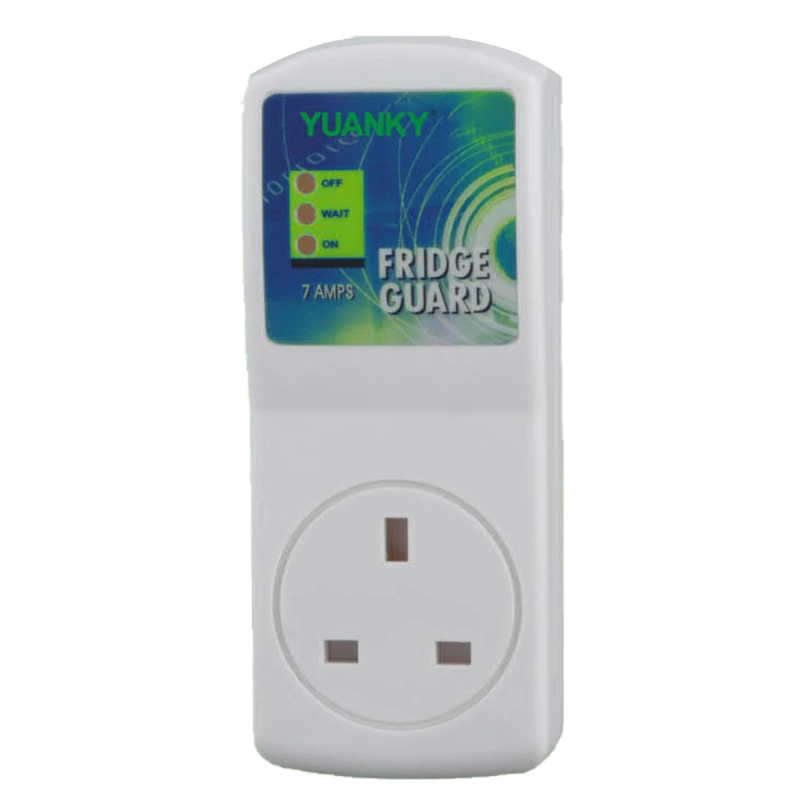
- Appliance-Specific Protectors: High-value appliances such as refrigerators, air conditioners, and water heaters often require dedicated voltage protectors due to their high power consumption and sensitivity to voltage fluctuations. These protectors typically include overvoltage, undervoltage, and surge protection functions, as well as delay timers to prevent damage from rapid power cycling.
- Solar PV System Protection: With the growing adoption of residential solar PV systems, voltage protectors are essential for protecting inverters, batteries, and other components from voltage surges caused by lightning, grid faults, or system malfunctions. Surge protectors are installed at the PV array, inverter input/output, and battery connections.
4.2 Commercial Applications
Commercial buildings, such as offices, retail stores, and hotels, have more complex electrical systems and higher power demands, requiring robust voltage protection solutions. Key applications include:
- Office Equipment Protection: Computers, servers, printers, copiers, and communication systems in offices are highly sensitive to voltage fluctuations and surges. Voltage protectors, including UPS (uninterruptible power supply) systems with surge protection, are used to ensure uninterrupted operation and prevent data loss.
- Retail Store Protection: Retail stores use a variety of electrical equipment, including cash registers, POS systems, security cameras, and lighting. Voltage protectors are installed to protect these devices from surges caused by power grid switching or lightning, as well as undervoltage due to peak load conditions (e.g., during holiday shopping seasons).
- Hotel and Hospitality Protection: Hotels require reliable electrical systems to power guest rooms, HVAC systems, elevators, and kitchen equipment. Voltage protectors are used to prevent downtime and ensure guest comfort, particularly in critical areas such as server rooms, emergency lighting, and medical equipment (in hotel clinics).
- Data Centers: Data centers house thousands of servers, storage devices, and networking equipment, which are extremely sensitive to voltage anomalies. Voltage protectors in data centers include surge protectors, UPS systems, and voltage regulators, working together to provide 24/7 protection against surges, undervoltage, overvoltage, and power outages.
4.3 Industrial Applications
Industrial environments, such as manufacturing plants, refineries, and power stations, have harsh operating conditions (high voltage, high current, EMI, temperature extremes) and critical equipment that requires maximum protection. Voltage protectors play a vital role in ensuring operational efficiency and safety:
- Motor Protection: Industrial motors are susceptible to damage from undervoltage, overvoltage, and surges. Voltage protectors for motors include overload relays, undervoltage relays, and surge protectors, preventing motor burnout, insulation damage, and costly downtime. For example, in a manufacturing plant, conveyer belt motors are protected by voltage protectors that disconnect the motor when voltage falls below a safe level.
- Power Distribution Systems: Industrial power distribution systems (e.g., switchgear, transformers, busbars) are exposed to voltage surges from lightning, grid faults, and load switching. Surge protectors installed at the point of entry and between distribution stages mitigate these surges, protecting expensive equipment and ensuring grid stability.
- Automation and Control Systems: PLCs, sensors, variable frequency drives (VFDs), and SCADA (supervisory control and data acquisition) systems are the backbone of industrial automation. These components are highly sensitive to voltage noise and surges, so voltage protectors with filtering functions are used to ensure accurate signal transmission and reliable operation.
- Renewable Energy Plants: Solar farms and wind turbines generate electricity that is fed into the power grid, but voltage fluctuations from these sources can affect grid stability. Voltage protectors in renewable energy plants include surge protectors, voltage regulators, and reactive power compensation devices, ensuring that the generated power meets grid standards and protecting equipment from surges and faults.
4.4 Specialized Applications
Voltage protectors are also used in specialized environments and industries with unique requirements:
- Automotive Industry: Modern vehicles are equipped with complex electrical systems, including engine control units (ECUs), infotainment systems, and battery management systems. Voltage protectors in automobiles provide polarity protection, surge protection (from alternator spikes), and short circuit protection, ensuring the reliability of these systems and preventing battery damage.
- Aerospace and Defense: Aerospace and defense systems (e.g., aircraft avionics, radar systems, military equipment) operate in extreme conditions and require high-reliability voltage protection. Voltage protectors in these applications are designed to withstand high G-forces, temperature extremes, and EMI, providing surge protection, noise suppression, and overvoltage/undervoltage protection.
- Medical Equipment: Medical devices such as MRI machines, X-ray equipment, and patient monitors require stable and clean power to ensure accurate operation and patient safety. Voltage protectors for medical equipment include UPS systems, surge protectors, and noise filters, preventing power disruptions and voltage anomalies that could compromise patient care.
- Telecommunications: Telecommunication systems (e.g., cell towers, data routers, fiber optic networks) are exposed to voltage surges from lightning and grid faults. Voltage protectors installed at cell tower sites, data centers, and network hubs protect sensitive communication equipment, ensuring uninterrupted service and preventing data loss.
5. Factors to Consider When Selecting Voltage Protectors
Selecting the right voltage protector for a specific application requires careful consideration of several factors to ensure optimal protection and performance:
5.1 Voltage Rating
The voltage rating of the protector must match the rated voltage of the circuit or equipment it is protecting. For AC circuits, this includes the nominal voltage (e.g., 120V, 240V, 480V) and the frequency (50Hz or 60Hz). For DC circuits, the protector’s voltage rating must be higher than the maximum operating voltage of the system to avoid premature activation.
5.2 Clamping Voltage
Clamping voltage is the maximum voltage that the protector allows to pass through to the load during a surge. It should be selected based on the voltage tolerance of the protected equipment. For sensitive electronics (e.g., microprocessors), a lower clamping voltage (e.g., 150V for a 120V circuit) is preferred, while for rugged equipment (e.g., motors), a higher clamping voltage may be acceptable.
5.3 Response Time
Response time refers to how quickly the protector activates when a voltage anomaly is detected. For transient surges (e.g., lightning strikes), a fast response time (nanoseconds) is critical to prevent the surge from reaching the load. TVSs and SADs have faster response times than MOVs, making them suitable for sensitive electronics.
5.4 Current Handling Capacity
Current handling capacity (surge current rating) is the maximum amount of current that the protector can safely divert or conduct during a surge. It is measured in kiloamperes (kA) and should be selected based on the expected surge current in the application. For example, a whole-house surge protector may require a surge current rating of 50kA or higher, while a power strip surge protector may have a rating of 10-20kA.
5.5 Environmental Conditions
Environmental factors such as temperature, humidity, dust, and vibration can affect the performance and lifespan of voltage protectors. Protectors used in outdoor or harsh industrial environments should have a high IP (Ingress Protection) rating, wide operating temperature range, and rugged construction to withstand these conditions.
5.6 Type of Protection
The type of voltage anomaly (surge, undervoltage, overvoltage, noise) and the specific requirements of the application determine the type of protection needed. For example, a data center may require a combination of surge protection, undervoltage protection, and noise suppression, while a DC circuit may only need polarity protection and short circuit protection.
5.7 Certification and Standards
Voltage protectors should comply with relevant industry standards and certifications to ensure safety and performance. Common standards include IEEE C62.41 (for surge protectors), IEC 61643 (for low-voltage surge protective devices), and UL 1449 (for surge protectors in the United States). Certification by reputable organizations such as UL, CSA, or TUV indicates that the protector meets strict safety and performance criteria.
6. Future Trends in Voltage Protector Technology
As electrical systems become more complex, interconnected, and reliant on sensitive electronics, voltage protector technology is evolving to meet new challenges and demands. The following are key future trends in the field:
6.1 Smart Voltage Protectors
The integration of IoT (Internet of Things) technology and smart sensors is enabling the development of smart voltage protectors. These protectors can monitor voltage conditions in real time, send alerts to users via mobile apps or cloud platforms, and even adjust protection settings automatically based on environmental conditions and equipment requirements. For example, a smart whole-house surge protector can notify homeowners of a surge event, track power consumption, and provide diagnostic information to identify potential issues.
6.2 Miniaturization and High-Density Design
With the increasing miniaturization of electronic devices and the growing demand for compact electrical systems, voltage protectors are being designed with smaller form factors and higher density. Advances in materials science (e.g., new varistor materials, thin-film technology) and manufacturing processes are enabling the development of tiny, high-performance protectors that can be integrated into microchips, wearable devices, and IoT sensors.
6.3 Enhanced Protection for Renewable Energy Systems
The rapid growth of renewable energy sources such as solar PV, wind, and energy storage systems is creating new challenges for voltage protection. These systems have unique voltage characteristics (e.g., variable output, DC voltage) and are often installed in remote or harsh environments. Future voltage protectors will be specifically designed for renewable energy applications, with higher surge current ratings, wider voltage ranges, and compatibility with energy storage systems.
6.4 Improved Reliability and Longevity
Advancements in component materials and design are improving the reliability and longevity of voltage protectors. For example, new MOV materials with better thermal stability and lower degradation rates are extending the lifespan of surge protectors. Additionally, self-healing components that can recover from minor surges without permanent damage are being developed, reducing the need for frequent replacement.
6.5 Integration with Energy Management Systems
Voltage protectors are increasingly being integrated with energy management systems (EMS) to optimize power usage and improve energy efficiency. By monitoring voltage conditions and power consumption, these integrated systems can identify opportunities to reduce energy waste, prevent equipment damage, and lower operating costs. For example, a smart voltage protector in a commercial building can work with the EMS to adjust lighting and HVAC systems during voltage fluctuations, reducing energy consumption and protecting equipment.
7. Conclusion
Voltage protectors are essential components in modern electrical systems, providing critical protection against voltage anomalies that can damage equipment, disrupt operations, and pose safety hazards. Their working principles, which include shunting, clamping, isolation, and filtering, are tailored to address different types of voltage fluctuations, from transient surges to sustained overvoltage and undervoltage. The functions of voltage protectors extend beyond simple surge protection to include undervoltage protection, noise suppression, polarity protection, and short circuit protection, making them versatile and adaptable to a wide range of applications.
From residential homes and commercial buildings to industrial facilities and specialized environments such as aerospace and medical facilities, voltage protectors play a vital role in ensuring the reliability, safety, and efficiency of electrical systems. When selecting a voltage protector, factors such as voltage rating, clamping voltage, response time, current handling capacity, and environmental conditions must be carefully considered to ensure optimal protection.
As technology advances, voltage protectors are becoming smarter, smaller, and more reliable, with enhanced capabilities to meet the evolving needs of modern electrical systems. The integration of IoT technology, miniaturization, and compatibility with renewable energy systems are key trends that will shape the future of voltage protector technology. By staying abreast of these trends and selecting the right voltage protector for each application, engineers, technicians, and system designers can ensure the long-term performance and safety of electrical systems.
In conclusion, voltage protectors are not just defensive devices but enablers of technological progress, allowing us to harness the power of electricity safely and efficiently in an increasingly connected world. Their importance will only grow as electrical systems become more complex and reliant on sensitive electronics, making them a critical investment for any organization or individual seeking to protect their equipment and ensure uninterrupted operation.
Post time:
Jan-02-2026

