

1. Introduction to Three-Phase Asynchronous Motors
1.1 Definition and Fundamental Identity
A three-phase Asynchronous motor (TPIM), also referred to as an asynchronous motor, is a type of alternating current (AC) motor that operates based on the principle of electromagnetic Asynchronous between the stator’s three-phase windings and the rotor’s conductive bars. Unlike synchronous motors that rotate at the same speed as the stator’s rotating magnetic field (RMF), TPIMs run at a slightly lower speed—hence the term “asynchronous”—due to the necessary slip (relative speed difference) between the RMF and the rotor. This structural simplicity, absence of brushes or slip rings (in squirrel-cage designs), and robust performance have made TPIMs the most widely used electric motors globally, accounting for over 70% of all industrial motor applications and approximately 45% of global electricity consumption (International Energy Agency, 2023).
TPIMs serve as the workhorse of modern industry, powering everything from small pumps to large industrial compressors, and their dominance stems from inherent advantages: low manufacturing cost, high reliability, minimal maintenance requirements, and excellent compatibility with three-phase power grids. Unlike brushed DC motors or permanent magnet synchronous motors (PMSMs), TPIMs do not rely on rare-earth materials or complex commutation systems, making them cost-effective and resilient in harsh operating environments.
1.2 Historical Evolution
The development of the three-phase Asynchronous motor is closely linked to the broader electrification revolution of the late 19th century. While Michael Faraday’s electromagnetic Asynchronous experiments (1831) laid the theoretical foundation, it was Nikola Tesla who patented the first practical three-phase Asynchronous motor in 1887. Tesla’s design addressed critical limitations of early DC motors—such as limited power output and frequent maintenance—by leveraging three-phase alternating current to generate a rotating magnetic field without mechanical commutation.
The adoption of TPIMs accelerated with the expansion of three-phase power grids in the early 20th century. Westinghouse Electric, which acquired Tesla’s patents, commercialized the motor for industrial use, replacing steam engines and DC motors in factories, mines, and transportation systems. Key milestones in TPIM evolution include:
- 1920s: Introduction of squirrel-cage rotors with aluminum die-casting, simplifying manufacturing and improving reliability.
- 1950s: Development of high-efficiency silicon steel laminations, reducing core losses and boosting energy efficiency.
- 1970s: Integration with variable frequency drives (VFDs), enabling precise speed control and expanding application scope.
- 2000s: Adoption of international efficiency standards (e.g., IE1 to IE5) to address energy conservation goals.
- 2020s: Advancements in sensorless control and smart monitoring, enhancing operational visibility and predictive maintenance.
Today, TPIMs remain the backbone of industrial infrastructure, with continuous innovations focused on improving efficiency, reducing size, and integrating with digital control systems.
1.3 Classification and Structural Components
1.3.1 Classification Criteria
TPIMs are classified based on two primary criteria: rotor design and frame size/power rating.
- By Rotor Type:
- Squirrel-Cage Asynchronous Motors (SCIMs): The most common type (90% of TPIM installations) features a rotor composed of conductive bars (typically copper or aluminum) embedded in a laminated iron core, short-circuited at both ends by ring-shaped end rings. The rotor’s appearance resembles a squirrel cage, hence the name. SCIMs are favored for their simplicity, low cost, and high reliability, suitable for constant-speed and variable-speed applications.
- Wound-Rotor Asynchronous Motors (WRIMs): The rotor consists of three-phase windings similar to the stator, with terminals connected to external slip rings and brushes. This design allows external resistors to be connected to the rotor circuit, enabling controlled starting (reducing inrush current) and adjustable speed/torque characteristics. WRIMs are used in high-torque applications such as cranes, hoists, and large pumps, but their higher cost and maintenance needs (due to slip rings and brushes) limit widespread use compared to SCIMs.
- By Power Rating and Frame Size:
- Small TPIMs (0.1–10 kW): Used in household appliances (e.g., large air conditioners), small pumps, and light industrial equipment.
- Medium TPIMs (10–100 kW): Dominant in manufacturing (conveyors, machine tools), HVAC systems, and water treatment plants.
- Large TPIMs (100 kW–10 MW+): Deployed in heavy industry (steel mills, cement plants), power generation (hydroelectric pumps), and marine propulsion.
1.3.2 Core Structural Components
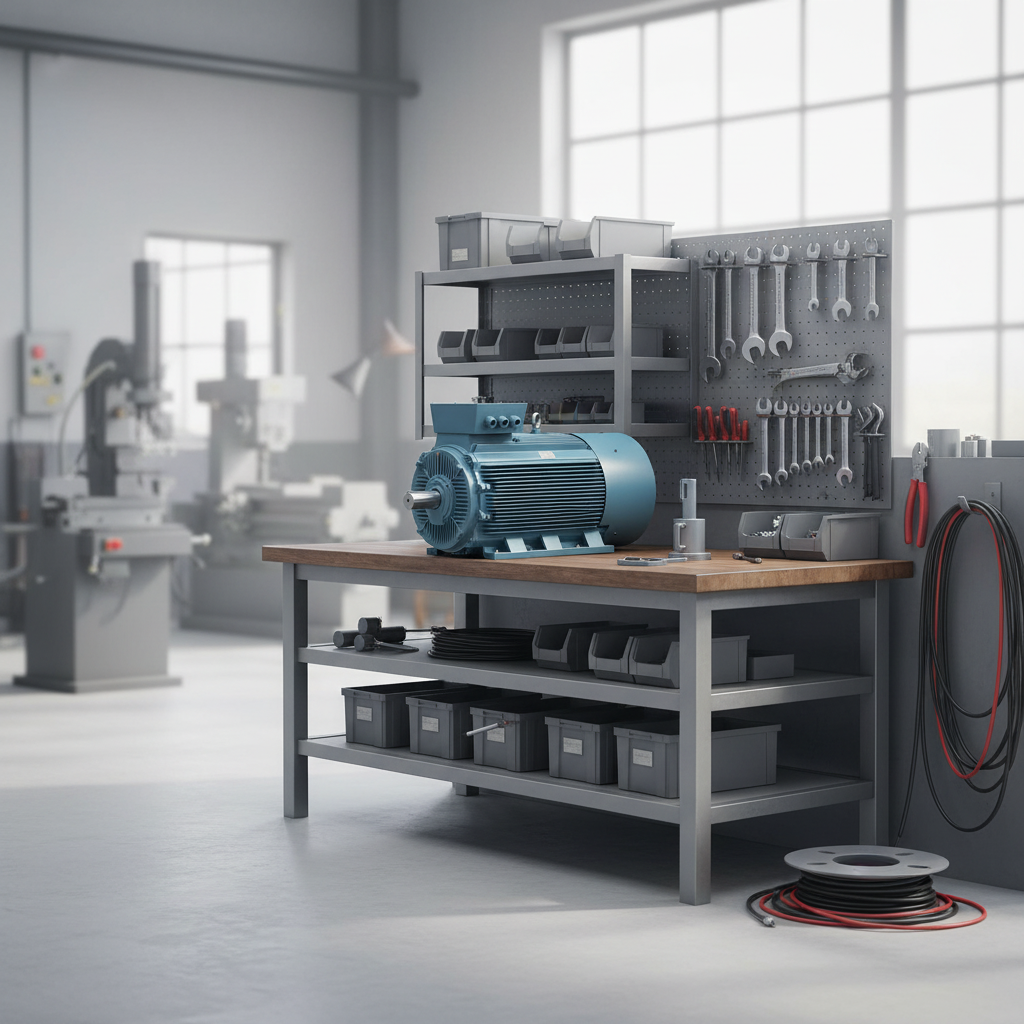
A TPIM comprises four key components: stator, rotor, air gap, and auxiliary systems (cooling, bearings, terminals).
- Stator: The stationary outer part of the motor, consisting of a laminated iron core (made of 0.35–0.5 mm thick silicon steel sheets to reduce eddy current losses) and three-phase windings. The windings are uniformly distributed in slots around the core’s inner circumference, connected in either star (Y) or delta (Δ) configuration. When supplied with three-phase AC power, the windings generate a rotating magnetic field (RMF) that rotates at synchronous speed (Ns = 60f/P, where f is the supply frequency in Hz and P is the number of pole pairs).
- Rotor: The rotating inner component, separated from the stator by a narrow air gap (typically 0.2–2 mm). For SCIMs, the rotor core is laminated to minimize losses, with conductive bars inserted into slots and short-circuited by end rings (aluminum die-cast for mass production). For WRIMs, the rotor windings are wound around the core and connected to slip rings mounted on the rotor shaft. The rotor’s primary function is to induce current via electromagnetic Asynchronous, generating torque to drive the load.
- Air Gap: The small gap between stator and rotor is critical for motor performance. A narrow air gap reduces magnetic reluctance, improving power factor and efficiency, but requires precise manufacturing to avoid rotor-stator contact (rubbing). Excessive air gap increases magnetizing current, reducing efficiency and torque density.
- Auxiliary Systems:
- Cooling Systems: Essential for dissipating heat generated by copper losses (in windings) and iron losses (in cores). Small TPIMs use natural air cooling (IC01), while medium/large motors employ forced air cooling (IC411/IC416) or liquid cooling (IC81W) for high-power applications.
- Bearings: Support the rotor shaft, reducing friction. Common types include deep-groove ball bearings (for small motors) and cylindrical roller bearings (for large, high-load motors), often sealed and lubricated for long service life.
- Terminals and Enclosure: The terminal box houses connections for the three-phase stator windings. Enclosures (e.g., IP54, IP65) protect the motor from dust, moisture, and mechanical damage, with ratings tailored to operating environments (industrial, marine, hazardous areas).
1.4 Working Principle: Electromagnetic Asynchronous and Rotating Magnetic Field
The operation of TPIMs hinges on two core phenomena: the generation of a rotating magnetic field (RMF) in the stator and electromagnetic Asynchronous in the rotor.
1.4.1 Generation of the Rotating Magnetic Field (RMF)
Three-phase AC power consists of three sinusoidal currents (phase A, B, C) that are 120° out of phase with each other. When these currents flow through the stator’s three-phase windings (arranged 120° apart around the core), each winding produces a pulsating magnetic field (alternating north and south poles) along its axis. The superposition of these three pulsating fields creates a single RMF that rotates continuously around the stator at synchronous speed (Ns).
The direction of rotation of the RMF depends on the phase sequence of the supply (A→B→C or C→B→A), which can be reversed by swapping any two of the three-phase supply leads—an important feature for applications requiring bidirectional motion (e.g., conveyors, pumps). The magnitude of the RMF is constant (proportional to the supply voltage and winding turns), ensuring stable torque output during operation.
1.4.2 Electromagnetic Asynchronous in the Rotor
As the RMF rotates, it cuts across the rotor’s conductive bars (in SCIMs) or windings (in WRIMs). According to Faraday’s law of electromagnetic Asynchronous, this relative motion induces an electromotive force (EMF) in the rotor conductors. Since the rotor conductors are short-circuited (via end rings for SCIMs or slip rings for WRIMs), the induced EMF generates a current (rotor current).
The rotor current interacts with the stator’s RMF, producing a mechanical force (Lorentz force) in accordance with Fleming’s left-hand rule. This force creates a torque that drives the rotor to rotate in the same direction as the RMF. However, the rotor can never reach synchronous speed (Ns) because zero relative motion between the RMF and rotor would stop electromagnetic Asynchronous (no induced current, no torque). The difference between synchronous speed and actual rotor speed (Nr) is known as slip (s), defined by the formula:
s=NsNs−Nr×100%
Slip is a key parameter for TPIM performance:
- At startup (Nr = 0), slip s = 100%, and the rotor current is very high (typically 5–8 times the rated current), causing inrush current.
- During normal operation, slip ranges from 0.5% to 5% for SCIMs (lower slip indicates higher efficiency and speed stability).
- For WRIMs, slip can be adjusted by varying external rotor resistance, enabling torque control at low speeds.
This asynchronous operation—driven by Asynchronous rather than direct current supply to the rotor—gives TPIMs their defining characteristics: simplicity, robustness, and self-starting capability.
2. Core Functions of Three-Phase Asynchronous Motors
2.1 Power Conversion and Efficiency
The primary function of TPIMs is to convert electrical energy from the three-phase power grid into mechanical energy for driving loads. This conversion process involves three stages: electrical energy input to the stator, electromagnetic energy transfer via the RMF, and mechanical energy output from the rotor. The efficiency of this conversion (η) is a critical performance metric, defined as the ratio of mechanical output power (Pout) to electrical input power (Pin):
η=PinPout×100%
2.1.1 Energy Loss Mechanisms
TPIM efficiency is limited by four primary loss types, which manufacturers optimize through design and material selection:
- Copper Losses (I²R Losses): Occur in the stator and rotor windings due to current flow through resistive conductors. These losses are proportional to the square of the current (I²) and the winding resistance (R). To reduce copper losses, manufacturers use high-conductivity materials (copper for windings, aluminum for rotor bars) and optimize winding design (e.g., stranded conductors to reduce skin effect at high frequencies).
- Iron Losses (Core Losses): Result from magnetic hysteresis and eddy currents in the stator and rotor cores. Hysteresis loss is caused by the repeated reversal of the magnetic field in the core, while eddy current loss is induced by circulating currents in the core laminations. Using thin silicon steel laminations (with insulation between layers) and low-hysteresis materials minimizes these losses.
- Mechanical Losses: Include friction in bearings, windage (air resistance) from the rotating rotor, and brush friction (only in WRIMs). These losses increase with speed and are reduced by using high-quality bearings, aerodynamic rotor designs, and sealed enclosures.
- Stray Load Losses: Unintended losses caused by leakage magnetic fields, harmonic currents, and mechanical imperfections. These losses are difficult to measure directly but typically account for 1–3% of total losses, minimized through precise manufacturing and winding optimization.
2.1.2 Efficiency Classes and Standards
Global standards define efficiency classes for TPIMs to promote energy conservation. The most widely adopted standard is IEC 60034-30-1 (International Electrotechnical Commission), which specifies four efficiency classes:
- IE1 (Standard Efficiency): Minimum efficiency for general-purpose motors (e.g., 87.5% for a 15 kW, 4-pole motor).
- IE2 (High Efficiency): Mandatory in many countries (e.g., EU, China) since 2017, with efficiency 2–4% higher than IE1.
- IE3 (Premium Efficiency): Required for industrial applications in energy-conscious markets, achieving efficiencies above 90% for motors ≥15 kW.
- IE4 (Super Premium Efficiency): The highest current class, with efficiency up to 96% for large motors, designed for low-energy-consumption applications.
For example, a 100 kW, 4-pole IE3 TPIM operates at 94.5% efficiency, while an IE4 equivalent reaches 95.8%, reducing annual energy consumption by approximately 1,200 kWh (based on 8,000 operating hours/year) and lowering carbon emissions.
2.2 Speed and Torque Characteristics
TPIMs exhibit inherent speed-torque characteristics that make them suitable for diverse load requirements. Unlike DC motors, TPIMs do not have a linear speed-torque relationship, but their performance can be tailored via supply voltage, frequency, or rotor resistance (for WRIMs).
2.2.1 Key Torque Parameters
- Starting Torque (Tst): The torque generated at startup (slip s = 1) to overcome the load’s static resistance. SCIMs typically have starting torque ratios (Tst/Trated) of 1.5–2.5, while WRIMs can achieve ratios up to 4.0 by adding external rotor resistance. High starting torque is critical for applications such as compressors, pumps, and conveyors that require overcoming high initial loads.
- Rated Torque (Trated): The continuous torque the motor can deliver at rated speed (Nr) without overheating. Rated torque is calculated as:
Trated=Nrated9550×Prated
where
Prated
is rated power in kW, and
Nrated
is rated speed in rpm.
- Maximum Torque (Tmax): Also known as breakdown torque, the maximum torque the motor can produce before stalling. Tmax typically ranges from 2.0–3.0 times Trated for SCIMs, providing a safety margin for transient load spikes (e.g., sudden increases in conveyor load).
- Pull-Up Torque (Tpu): The minimum torque generated between startup and rated speed, ensuring the motor can accelerate the load through the critical speed range without stalling.
2.2.2 Speed Control Methods
While TPIMs are inherently constant-speed motors when connected directly to a fixed-frequency grid, modern applications demand variable speed control. The most common methods are:
- Variable Frequency Drives (VFDs): The dominant speed control technology, VFDs convert fixed-frequency (50/60 Hz) AC power into variable-frequency, variable-voltage power. By adjusting frequency (f) and voltage (V) in proportion (V/f control), VFDs enable smooth speed regulation over a wide range (0–200% of rated speed) while maintaining constant torque (below rated speed) or constant power (above rated speed). VFDs also reduce inrush current during startup (to 1.2–1.5 times rated current) and improve energy efficiency by matching motor speed to load demand (e.g., reducing pump speed by 20% cuts energy consumption by ~50% via the affinity law).
- Rotor Resistance Control (WRIMs Only): By adding external resistors to the rotor circuit, WRIMs can adjust torque and speed. Increasing rotor resistance raises starting torque and reduces starting current but lowers efficiency at rated speed. This method is used in applications requiring frequent startups with heavy loads (e.g., cranes, hoists) but is less efficient than VFD control.
- Voltage Control: Reducing stator voltage lowers motor speed but also reduces torque (torque is proportional to V²), making this method suitable only for light loads (e.g., fans, blowers) with low torque requirements. It is less precise and efficient than VFDs.
- Pole Changing: Some TPIMs are designed with multiple stator winding configurations to change the number of pole pairs (P), altering synchronous speed (Ns = 60f/P). For example, a 4/8-pole motor can switch between 1500 rpm and 750 rpm (at 50 Hz), but this method only allows discrete speed steps and is less flexible than VFDs.
2.2.3 Load Adaptability
TPIMs excel at adapting to varying load conditions due to their soft speed-torque characteristics. When the load increases, the rotor slows down (slip increases), increasing rotor current and electromagnetic torque to match the load. This self-regulating behavior eliminates the need for complex torque control systems in constant-load applications (e.g., pumps, fans). For variable-load applications (e.g., conveyors, machine tools), VFD integration enables precise torque and speed control, ensuring optimal performance across operating ranges.
2.3 Self-Starting Capability
A defining advantage of TPIMs is their inherent self-starting capability—no external starting mechanisms (e.g., starters for DC motors) are required when connected to a three-phase power grid. This is enabled by the stator’s rotating magnetic field, which immediately induces current in the rotor and generates torque at startup.
2.3.1 Starting Mechanisms for SCIMs
While TPIMs are self-starting, direct-on-line (DOL) starting can cause high inrush current (5–8 times rated current), which may disrupt the power grid or damage motor windings. To mitigate this, several starting methods are used:
- Direct-On-Line (DOL) Starter: The simplest method, connecting the motor directly to the grid. Used for small motors (≤5 kW) where inrush current is negligible.
- Star-Delta (Y-Δ) Starter: Reduces starting voltage by connecting the stator windings in star configuration (voltage = 1/√3 of line voltage) during startup, then switching to delta (full voltage) once the motor accelerates. This reduces inrush current to 1/3 of DOL starting current, suitable for motors 5–50 kW.
- Auto-Transformer Starter: Uses an auto-transformer to reduce starting voltage (typically 50%, 65%, or 80% of line voltage), adjusting inrush current proportionally. More flexible than Y-Δ starters but more expensive, used for medium motors (20–100 kW).
- Soft Starter: Uses solid-state relays (thyristors) to gradually increase stator voltage during startup, limiting inrush current and providing smooth acceleration. Suitable for motors requiring gentle starting (e.g., conveyors, pumps) and compatible with variable-load applications.
- VFD Starting: The most advanced method, controlling voltage and frequency from startup to rated speed, limiting inrush current to near-rated levels while providing precise speed control. Ideal for large motors (≥100 kW) and applications with strict current limits.
2.3.2 Starting Performance Optimization
Manufacturers optimize TPIM starting performance through rotor design:
- Deep-Bar Rotors: For SCIMs, rotor bars are placed in deep slots to leverage the skin effect, which concentrates current near the surface of the bar at high frequencies (startup). This increases rotor resistance during startup (boosting torque) and reduces resistance at rated speed (lowering copper losses).
- Double-Cage Rotors: SCIMs with two sets of rotor bars (upper, thin bars for high resistance at startup; lower, thick bars for low resistance at rated speed) provide high starting torque and low running losses, balancing performance for heavy-load startups.
2.4 Reliability and Durability
TPIMs are renowned for their exceptional reliability and long service life (typically 20,000–100,000 operating hours), attributed to their simple structure and absence of wear-prone components (brushes, commutators, slip rings in SCIMs).
2.4.1 Mechanical Reliability
- Rotor Design: Laminated rotor cores reduce vibration and thermal stress, while balanced rotor assemblies (dynamic balancing to ISO 1940 standards) minimize mechanical wear.
- Bearings: High-quality bearings (sealed, lubricated for life) reduce friction and maintenance needs. For harsh environments, bearings with special lubricants (e.g., high-temperature grease) or isolation systems (to prevent contamination) are used.
- Enclosure Protection: IP-rated enclosures (e.g., IP54 for dust and water spray, IP65 for heavy rain, IP66 for submersion) shield internal components from environmental hazards. Explosion-proof enclosures (Ex d, Ex e) are available for hazardous areas (e.g., oil refineries, chemical plants).
2.4.2 Electrical Reliability
- Winding Insulation: Stator windings are insulated with high-temperature materials (e.g., Class F insulation, rated for 155°C; Class H for 180°C) to withstand thermal stress. Vacuum pressure impregnation (VPI) is used to seal windings against moisture and dust, preventing insulation breakdown.
- Overload Protection: Built-in thermal protectors (e.g., bimetallic strips, thermistors) monitor winding temperature, disconnecting power if overheating occurs. External protection devices (circuit breakers, thermal relays) prevent damage from overcurrent, phase imbalance, or voltage fluctuations.
- Voltage and Frequency Tolerance: TPIMs are designed to operate within ±10% of rated voltage and ±5% of rated frequency, accommodating grid variations without performance degradation.
2.4.3 Maintenance Requirements
TPIMs require minimal maintenance compared to other motor types:
- SCIMs: No brush replacement or slip ring maintenance; routine checks include bearing lubrication (every 5,000–10,000 hours), cooling system cleaning, and winding insulation testing.
- WRIMs: Require periodic brush and slip ring inspection/replacement (every 10,000–20,000 hours) and rotor winding insulation testing.
This low maintenance burden reduces downtime and operational costs, making TPIMs ideal for remote or hard-to-access applications (e.g., offshore wind turbines, underground pumps).
3. Industrial and Commercial Applications of Three-Phase Asynchronous Motors
TPIMs are ubiquitous across virtually every industry due to their versatility, reliability, and cost-effectiveness. Their applications span from small household appliances to large industrial machinery, with power ratings ranging from fractional kilowatts to megawatts. Below is a detailed breakdown of key application sectors, highlighting motor selection criteria and performance requirements.
3.1 Manufacturing and Automation
The manufacturing sector is the largest consumer of TPIMs, using them to power production lines, machine tools, and material handling equipment. TPIMs are favored for their ability to operate continuously under heavy loads and integrate with automation systems.
3.1.1 Machine Tools (CNC Lathes, Milling Machines, Grinding Machines)
CNC (Computer Numerical Control) machines rely on TPIMs for precise motion control, with VFDs enabling variable speed and torque to match machining requirements. Key applications include:
- Spindle Drives: High-speed TPIMs (3,000–12,000 rpm) power the spindle, delivering constant torque for cutting operations. For example, a CNC milling machine uses a 15 kW IE3 TPIM with a VFD to adjust spindle speed from 100–6,000 rpm, ensuring optimal cutting performance for different materials (steel, aluminum, plastic).
- Feed Drives: Smaller TPIMs (1–5 kW) control the linear movement of the workpiece or tool, with servo-like precision when paired with position feedback systems (encoders). These motors must have low rotor inertia for rapid acceleration/deceleration (dynamic response time
Selection criteria: High efficiency (IE3/IE4), low vibration, precise speed control (±0.1% speed regulation), and compatibility with CNC controllers.
3.1.2 Conveyor Systems (Belt Conveyors, Roller Conveyors, Overhead Conveyors)
Conveyors in factories, warehouses, and distribution centers use TPIMs to transport materials, components, and finished goods. Key features include:
- Variable Speed Control: VFD-integrated TPIMs adjust speed based on production volume (e.g., 0.5–2 m/s for belt conveyors), reducing energy consumption and wear.
- High Starting Torque: To overcome static friction of loaded conveyors, motors with Tst/Trated ratios ≥2.0 are used. For long-distance conveyors (e.g., mining belts), WRIMs with external rotor resistance provide high starting torque and overload capacity.
Example: A warehouse distribution center uses 20 kW IE3 SCIMs with VFDs for its belt conveyors, achieving 15% energy savings compared to fixed-speed motors and reducing maintenance downtime by 30%.
3.1.3 Robotics and Automated Guided Vehicles (AGVs)
Industrial robots and AGVs use compact, high-torque TPIMs for joint motion and propulsion:
- Robot Joints: Small TPIMs (0.5–3 kW) with planetary gearboxes deliver precise torque control (±0.5 Nm) for robotic arms, enabling smooth movement in assembly and welding tasks.
- AGV Propulsion: 2–10 kW TPIMs power AGV wheels, with VFDs providing variable speed (0–5 km/h) and bidirectional motion. These motors must be compact (high power density ≥2 kW/kg) and durable for 24/7 operation.
3.2 Pumping and Compression Systems
Pumps and compressors account for approximately 25% of global TPIM installations, as their load characteristics (quadratic torque increase with speed) align perfectly with TPIM performance.
3.2.1 Centrifugal Pumps (Water Supply, Wastewater Treatment, Industrial Processes)
Centrifugal pumps use TPIMs to drive impellers, moving liquids for:
- Municipal Water Supply: Large TPIMs (50–500 kW) power water pumps in treatment plants and distribution networks, operating at constant speed or variable speed (VFD) to match demand. IE4 motors are increasingly adopted to reduce energy costs—for example, a 200 kW IE4 pump motor consumes 8,000 fewer kWh/year than an IE3 equivalent.
- Industrial Pumps: Chemical plants use corrosion-resistant TPIMs (stainless steel enclosures, IP65 rating) to pump acids, solvents, and slurries. These motors must withstand high temperatures (up to 120°C) and maintain efficiency under variable flow rates.
Selection criteria: High efficiency, low noise (≤75 dB), robust bearings (to handle axial loads from impellers), and compatibility with pump curve requirements.
3.2.2 Air Compressors (Reciprocating, Rotary Screw, Centrifugal)
Air compressors use TPIMs to compress air for industrial processes (pneumatic tools, packaging, HVAC):
- Rotary Screw Compressors: The most common type, using 15–100 kW TPIMs with VFDs to adjust speed based on air demand. Variable-speed compressors reduce energy consumption by 30–40% compared to fixed-speed models, as they operate at low speed during low-demand periods.
- Centrifugal Compressors: Large industrial compressors (100–1,000 kW) use high-speed TPIMs (3,000–6,000 rpm) to drive centrifugal impellers, requiring precise speed control (VFD) and high reliability (≥99% availability).
Example: A food processing plant replaced its fixed-speed IE2 compressor motor with a 75 kW IE4 VFD-integrated TPIM, reducing annual energy costs by $6,000 and cutting carbon emissions by 4 tons.
3.3 HVAC and Ventilation Systems
Heating, Ventilation, and Air Conditioning (HVAC) systems in commercial buildings, factories, and data centers rely on TPIMs to power fans and blowers, which account for 15–20% of building energy consumption.
3.3.1 Centrifugal Fans and Axial Fans
- Centrifugal Fans: Used in ductwork systems, these fans use 5–50 kW TPIMs with VFDs to adjust airflow (500–50,000 m³/h) based on temperature and occupancy. High-efficiency IE3/IE4 motors reduce energy use, while low-noise designs (balanced rotors, sound-dampening enclosures) improve indoor air quality.
- Axial Fans: Deployed in cooling towers and industrial ventilation, axial fans use 10–200 kW TPIMs to move large air volumes (10,000–500,000 m³/h). These motors must withstand outdoor conditions (IP55 rating) and operate at variable speeds to optimize cooling efficiency.
3.3.2 Chillers and Cooling Towers
Chillers use TPIMs (50–500 kW) to drive compressors and evaporator fans, maintaining precise temperatures in data centers and manufacturing facilities. Cooling towers use TPIMs to power fan systems, with VFDs adjusting speed based on ambient temperature—reducing energy consumption by 25–35% compared to fixed-speed operation.
Example: A 10-story office building upgraded its HVAC fan motors from IE1 to IE4 TPIMs with VFDs, reducing annual energy use by 12,000 kWh and lowering maintenance costs by 20% due to improved reliability.
3.4 Heavy Industry (Steel, Cement, Mining)
Heavy industry requires high-power, rugged TPIMs to withstand extreme operating conditions (high temperature, dust, vibration) and drive large-scale machinery.
3.4.1 Steel Mills (Rolling Mills, Blast Furnaces, Conveyors)
- Rolling Mills: TPIMs (1,000–10,000 kW) power rolling mill stands, delivering high torque (100–1,000 kNm) to shape steel billets into sheets, bars, or rails. These motors use liquid cooling (IC81W) to dissipate heat from continuous operation and VFDs for precise speed control (±0.01% regulation) to ensure uniform steel thickness.
- Blast Furnaces: TPIMs (500–2,000 kW) drive blowers that supply hot air to blast furnaces, operating at high speed (3,000 rpm) and high temperature (up to 180°C). Explosion-proof enclosures (Ex d) are required to handle flammable gases.
3.4.2 Cement Plants (Kilns, Crushers, Conveyors)
Cement production uses TPIMs for every stage:
- Rotary Kilns: 500–3,000 kW TPIMs rotate kilns at low speed (0.5–2 rpm), requiring high torque (500–2,000 kNm) to handle heavy loads of limestone and clinker. These motors use variable speed control to adjust kiln rotation based on production demand.
- Crushers and Grinders: 100–500 kW TPIMs power jaw crushers, cone crushers, and ball mills, delivering high starting torque (Tst/Trated ≥3.0) to break and grind raw materials. Rugged enclosures (IP65) protect against dust and debris.
3.4.3 Mining (Mining Conveyors, Pumping Systems, Draglines)
Mining operations use large TPIMs to handle harsh conditions:
- Longwall Conveyors: 1,000–5,000 kW TPIMs transport coal and ore over distances up to 10 km, operating at variable speed (0.5–3 m/s) and withstanding extreme vibration. WRIMs are often used for their high starting torque and overload capacity.
- Draglines and Shovels: 5,000–10,000 kW TPIMs power the hoist and swing mechanisms of draglines, delivering massive torque (up to 10,000 kNm) for excavating and lifting ore. These motors use multiple windings and cooling systems to handle intermittent heavy loads.
3.5 Renewable Energy Systems
TPIMs play a dual role in renewable energy: as generators (converting mechanical energy to electricity) and as actuators (controlling system components).
3.5.1 Wind Energy (Wind Turbines)
- Asynchronous Generators: Most wind turbines (onshore and offshore) use doubly-fed Asynchronous generators (DFIGs)—a type of WRIM—with power ratings 1.5–15 MW. The rotor is connected to a back-to-back converter, allowing variable-speed operation (10–20 rpm for large turbines) and maximizing energy capture from varying wind speeds. DFIGs account for 70% of wind turbine installations due to their cost-effectiveness and grid compatibility.
- Pitch Control Motors: Small TPIMs (1–5 kW) adjust the pitch of turbine blades, optimizing wind capture and protecting the turbine during high winds. These motors require precise position control (±0.5°) and reliability in offshore environments (saltwater resistance, IP66 rating).
Example: A 5 MW offshore wind turbine uses a DFIG with a 5.5 MW TPIM as the generator, achieving 94% efficiency and integrating with the grid via a VFD to stabilize voltage and frequency.
3.5.2 Hydroelectric Energy (Hydropower Plants)
- Pump-Turbines: TPIMs (10–100 MW) act as motors to drive pump-turbines in pumped-storage hydropower plants, pumping water from lower to upper reservoirs during low electricity demand. During peak demand, the turbines reverse direction, and the motors act as generators to supply electricity.
- Gate Control Motors: Small TPIMs (0.5–2 kW) control the opening and closing of intake gates, regulating water flow to turbines. These motors must have high positioning accuracy and durability in wet environments.
3.6 Transportation Sector
While electric vehicles (EVs) primarily use PMSMs, TPIMs are still used in heavy-duty transportation and rail systems due to their robustness and low cost.
3.6.1 Rail Transportation (Locomotives, Trams, Metro Trains)
- Diesel-Electric Locomotives: TPIMs (500–2,000 kW) power the wheels, with diesel engines driving generators to supply three-phase AC power. These motors deliver high torque (10–50 kNm) for hauling heavy freight trains (up to 10,000 tons) and operate at variable speeds (0–120 km/h).
- Trams and Metro Trains: 100–500 kW TPIMs provide propulsion, with VFDs enabling smooth acceleration and regenerative braking (recovering energy during deceleration). These motors are compact (high power density ≥3 kW/kg) and quiet, suitable for urban environments.
3.6.2 Marine Transportation (Ship Propulsion, Auxiliary Systems)
- Auxiliary Systems: Ships use TPIMs (10–100 kW) for pumps, fans, and compressors, with marine-grade enclosures (IP67) to withstand saltwater corrosion.
- Small Vessels: Fishing boats and ferries use 50–200 kW TPIMs for electric propulsion, offering lower emissions and maintenance than diesel engines.
3.7 Household and Commercial Appliances
While small appliances often use single-phase motors, large household and commercial appliances rely on TPIMs for their higher efficiency and power output.
3.7.1 Commercial Refrigeration (Supermarket Coolers, Walk-In Freezers)
Commercial refrigeration systems use 1–5 kW TPIMs to drive compressors, operating at variable speeds (VFD) to maintain precise temperatures (-20°C to 5°C) and reduce energy consumption. IE3 motors are mandatory in many regions to meet energy efficiency standards.
3.7.2 Large HVAC Appliances (Commercial Air Conditioners, Heat Pumps)
Commercial air conditioners and heat pumps use 5–20 kW TPIMs for compressors and fans, with VFDs optimizing performance based on temperature and humidity. These motors are designed for quiet operation (≤65 dB) and long service life (≥15,000 hours).
3.8 Medical and Laboratory Equipment
TPIMs are used in medical equipment requiring reliable, precise motion control:
- Medical Pumps: Dialysis machines and infusion pumps use small TPIMs (0.1–1 kW) to deliver precise fluid flow rates (0.1–100 mL/min), with low noise and vibration to ensure patient comfort.
- Laboratory Equipment: Centrifuges use high-speed TPIMs (10,000–30,000 rpm) to separate samples, requiring precise speed control (±1 rpm) and balanced rotors to avoid vibration.
4. Technological Trends and Future Developments
The three-phase Asynchronous motor industry is evolving to meet global demands for higher efficiency, lower emissions, and smarter operation. Key trends include advancements in materials, power electronics, digitalization, and sustainability.
4.1 High-Efficiency Materials and Design Optimization
- Advanced Core Materials: Next-generation silicon steel laminations (e.g., grain-oriented electrical steel) with lower iron losses (reduced by 10–15%) are being adopted to improve IE4/IE5 efficiency. Amorphous metal cores (e.g., iron-nickel alloys) offer even lower losses (30–40% less than silicon steel) but are currently more expensive, limiting widespread use.
- Winding Technology: Superconducting windings (using high-temperature superconductors, HTS) reduce copper losses to near-zero, enabling ultra-high efficiency (≥98%) for large motors. However, cryogenic cooling requirements currently restrict HTS motors to niche applications (e.g., large wind turbines, naval propulsion).
- Air Gap Optimization: Precision manufacturing techniques (e.g., laser alignment) reduce air gap length to 0.1–0.5 mm, minimizing magnetic reluctance and improving power factor (from 0.85 to 0.95 for medium motors).
4.2 Integration with Power Electronics and Smart Controls
- Wide Bandgap (WBG) Semiconductors: Silicon carbide (SiC) and gallium nitride (GaN) VFDs replace traditional silicon-based converters, reducing switching losses by 50–70% and enabling higher operating frequencies (up to 100 kHz). This improves motor efficiency, reduces VFD size (30–40% smaller), and enhances speed control precision.
- Sensorless Control Algorithms: Advanced control strategies (e.g., model predictive control, sliding mode control) eliminate the need for position sensors (encoders), reducing cost and improving reliability. These algorithms use motor current and voltage data to estimate rotor speed and position with high accuracy (±0.5% error).
- IoT-Enabled Monitoring: TPIMs are increasingly equipped with sensors (temperature, vibration, current) and IoT connectivity, enabling real-time performance monitoring and predictive maintenance. Cloud-based platforms (e.g., Siemens MindSphere, ABB Ability) analyze sensor data to detect anomalies (e.g., bearing wear, winding overheating) and schedule maintenance before failures occur, reducing downtime by 20–30%.
4.3 Miniaturization and High Power Density
- Axial-Flux TPIMs: Unlike traditional radial-flux designs, axial-flux motors have a flat, disk-shaped structure with magnetic flux flowing axially. This design increases power density (up to 5 kW/kg, compared to 2–3 kW/kg for radial-flux motors) and reduces size/weight by 30–40%, making them suitable for space-constrained applications (e.g., EVs, drones).
- Modular Design: Modular TPIMs consist of multiple identical motor units (stator and rotor segments) that can be connected in parallel or series to adjust power output. This design simplifies manufacturing, reduces maintenance costs (failed modules can be replaced individually), and enables scalability (from 10 kW to 1 MW+).
4.4 Sustainability and Circular Economy
- Eco-Friendly Materials: Manufacturers are reducing reliance on toxic materials (e.g., lead-based solder) and using recycled materials (e.g., recycled copper windings, recycled aluminum rotor bars) to lower environmental impact.
- Energy Recovery: VFD-integrated TPIMs support regenerative braking in transportation and industrial applications, converting mechanical energy back to electrical energy and feeding it into the grid. For example, a metro train’s TPIMs recover 15–20% of energy during braking, reducing grid electricity consumption.
- End-of-Life Recycling: TPIMs are designed for easy disassembly, with recyclable components (steel, copper, aluminum) accounting for 95% of total weight. Recycling programs recover valuable materials, reducing landfill waste and raw material extraction.
4.5 Emerging Applications
- Electric Vertical Takeoff and Landing (eVTOL) Aircraft: eVTOLs use high-power-density axial-flux TPIMs (50–200 kW) for propulsion, offering lower cost and higher reliability than PMSMs. These motors must be lightweight (power density ≥4 kW/kg) and operate at high speeds (10,000–20,000 rpm).
- Microgrid Systems: TPIMs act as backup generators in microgrids, converting mechanical energy from diesel engines or renewable sources (wind, solar) into electricity. Their compatibility with VFDs enables seamless integration with microgrid control systems, ensuring stable power supply.
- Hyperloop Systems: Hyperloop pods use high-speed TPIMs (100–500 kW) for propulsion, operating at speeds up to 1,200 km/h. These motors require ultra-low aerodynamic drag and precise speed control to maintain safety and efficiency.
5. Conclusion
Three-phase Asynchronous motors (TPIMs) are the unsung heroes of modern industry, delivering reliable, cost-effective power to countless applications—from household appliances to large wind turbines. Their simple structure, inherent self-starting capability, high efficiency, and low maintenance requirements have made them the most widely used electric motors globally, accounting for over 70% of industrial motor installations and a significant portion of global electricity consumption.
The core functions of TPIMs—power conversion, speed/torque control, self-starting, and reliability—are optimized for diverse load conditions, enabling their adoption across manufacturing, energy, transportation, and commercial sectors. Advances in materials (e.g., high-efficiency silicon steel), power electronics (SiC/GaN VFDs), and digitalization (IoT monitoring) are further enhancing their performance, making them more efficient, compact, and intelligent.
As the world transitions to a more sustainable, electrified future, TPIMs will continue to play a critical role. Their compatibility with renewable energy systems, ability to reduce carbon emissions through high efficiency, and adaptability to emerging applications (eVTOLs, microgrids) ensure their relevance for decades to come. Manufacturers’ focus on sustainability—eco-friendly materials, energy recovery, and recycling—will further solidify TPIMs as a cornerstone of green technology.
In summary, three-phase Asynchronous motors are not just industrial components; they are the backbone of modern infrastructure, driving economic growth and technological progress while contributing to global energy conservation goals. Their enduring popularity and continuous evolution underscore their irreplaceable role in shaping the future of electrification.

Post time: Dec-19-2025