

In the realm of electrical power distribution, regional standards play a pivotal role in shaping the design and functionality of power accessories. Among these, the UK’s Type G electrical standard—characterized by its three rectangular pins arranged in a triangular pattern—stands out for its robust safety features and widespread adoption across multiple countries and territories. As households, businesses, and industries in these regions embrace an ever-growing array of electrical and electronic devices, the UK-Type G power strip has emerged as an essential tool for efficient, safe, and flexible power management. Unlike generic power strips, Type G models are engineered to comply with strict UK safety regulations (such as BS 1363) and are tailored to the specific needs of environments where Type G plugs are the norm. This article delves into the core functions, technical specifications, diverse application scenarios, safety protocols, and future developments of UK-Type G power strips, offering a detailed overview of their significance in modern electrical systems.
1. Overview of UK-Type G Power Strips
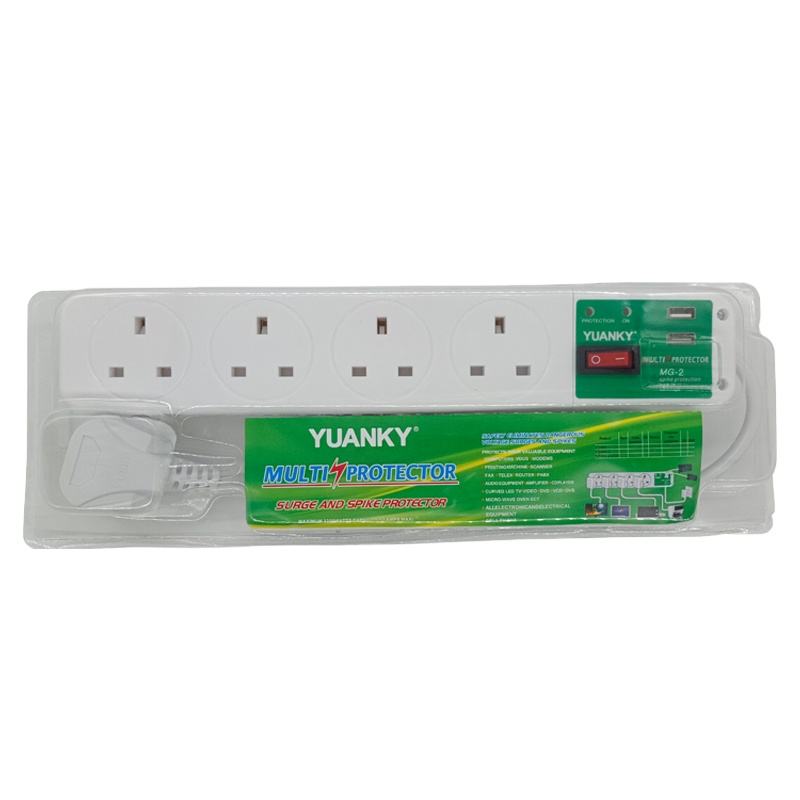
A UK-Type G power strip, also known as a British standard power strip or BS 1363 power extender, is an electrical device designed to expand the number of available power outlets while adhering to the UK’s Type G electrical standard. The defining feature of Type G power strips is their compatibility with Type G plugs, which are mandatory in the United Kingdom, Ireland, Singapore, Malaysia, Malta, Cyprus, and numerous former British colonies and overseas territories. Unlike universal power strips that accommodate multiple plug types, Type G models are purpose-built for regions where the Type G standard is prevalent, ensuring a secure and compliant connection for all connected devices.
The origins of the Type G standard and its corresponding power strips can be traced back to the early 20th century, when the UK sought to establish a safe and standardized electrical system. The Type G plug, introduced in 1947 and standardized under BS 1363, was designed with several safety innovations, including a fuse in the plug itself, insulated live and neutral pins, and a grounding pin that opens the socket’s shutter mechanism (preventing accidental contact with live components). As electrical devices became more common in households and workplaces, the need for extended power outlets grew, leading to the development of Type G power strips that retained these safety features while providing multiple sockets.
Modern UK-Type G power strips have evolved beyond basic power extension, integrating advanced features such as surge protection, USB charging ports, energy monitoring, and smart connectivity. However, they remain rooted in compliance with UK safety standards, ensuring that all components—from the socket design to the internal wiring—meet the rigorous requirements of organizations such as the Health and Safety Executive (HSE) and the British Standards Institution (BSI). This focus on safety and standardization makes Type G power strips a reliable choice for both residential and commercial use in Type G regions.
2. Core Functions and Technical Specifications of UK-Type G Power Strips
UK-Type G power strips are distinguished by their adherence to strict technical standards and their ability to address the specific power management needs of Type G regions. Their core functions encompass safe power extension, surge protection, enhanced connectivity options, and energy efficiency features, all of which are built around the unique characteristics of the Type G electrical system. Below is a detailed breakdown of their key functions and technical specifications:
2.1 Compliant Power Extension: Safety-First Design
The primary function of any power strip is to extend the number of available power outlets, and UK-Type G models excel in this regard while maintaining the safety features of the Type G standard. Unlike non-compliant power strips, which may compromise on safety to cut costs, Type G models are designed with sockets that feature shutter mechanisms—activated only by the insertion of the Type G plug’s grounding pin—preventing children or pets from inserting foreign objects and reducing the risk of electric shock.
Technical specifications for Type G power strip sockets include a rated voltage of 230V (the standard in UK and Type G regions) and a rated current of 13A, which aligns with the capacity of most Type G plugs and household circuits. The sockets are also compatible with the 13A fuse commonly found in Type G plugs, ensuring that the entire electrical chain (from the mains to the device) is protected against overcurrent. Most Type G power strips offer between 4 and 12 sockets, with some heavy-duty models providing up to 16 sockets for high-demand applications.
Another critical feature of compliant Type G power strips is their robust cable design. The cables are typically 1.5mm² in cross-sectional area, capable of carrying the full 13A current without overheating. They are also sheathed in flame-retardant materials (such as PVC or rubber) to reduce the risk of fire in the event of a fault. Additionally, the power strip’s casing is made from high-impact, flame-retardant plastic, providing physical protection for internal components and preventing accidental damage.
2.2 Surge Protection: Safeguarding Against Voltage Spikes
Electrical surges—sudden, temporary increases in voltage—pose a significant threat to sensitive electronic devices such as computers, televisions, and smartphones. In Type G regions, where the mains voltage is 230V, surges can be caused by lightning strikes, power grid fluctuations, or the switching on/off of large appliances (such as refrigerators or air conditioners). Most modern UK-Type G power strips integrate surge protection technology to mitigate these risks.
Surge protection in Type G power strips is typically achieved using metal oxide varistors (MOVs), which are semiconductor devices that act as voltage-sensitive resistors. When the voltage remains within the normal 230V range, the MOV has a high resistance and does not conduct electricity. However, when a surge occurs and the voltage exceeds a predetermined threshold (usually around 275V for Type G systems), the MOV’s resistance drops rapidly, creating a low-impedance path that diverts the excess voltage to the ground. This prevents the surge from reaching connected devices, protecting their internal circuits from damage.
Type G power strips with surge protection are rated by their surge energy capacity, measured in joules. A higher joule rating indicates a greater ability to absorb surge energy. For residential use, models with a rating of 1000–2000 joules are sufficient to protect most household devices. For commercial or industrial use, where equipment may be more expensive or sensitive, power strips with ratings of 3000 joules or higher are recommended. Many Type G power strips also feature an LED indicator light that signals whether the surge protection is active, providing users with immediate confirmation that their devices are protected.
2.3 Enhanced Connectivity: USB Charging and Specialized Outlets
As the number of USB-powered devices (such as smartphones, tablets, and wireless headphones) has grown, UK-Type G power strips have evolved to include integrated USB charging ports. These ports eliminate the need for separate USB adapters, freeing up Type G sockets for larger devices. Most Type G power strips with USB ports offer a combination of USB-A and USB-C ports, with USB-C supporting faster charging speeds (up to 60W) for compatible devices such as laptops and high-end smartphones.
The USB ports in Type G power strips are designed to comply with USB-IF (USB Implementers Forum) standards, ensuring safe and efficient charging. They often include smart charging technology, which detects the connected device and adjusts the charging current to optimize speed and prevent overcharging. For example, a smartphone may receive 2.4A of current, while a tablet may receive 3A, ensuring that each device charges as quickly as possible without damage.
Some specialized Type G power strips also feature additional outlets tailored to specific needs. For example, outdoor power strips may include weatherproof sockets with rubber covers to protect against rain and dust. Industrial models may feature 16A sockets for heavy-duty equipment, while home office models may include surge-protected outlets for computers and printers, separate from standard outlets for less sensitive devices (such as lamps).
2.4 Energy Efficiency and Smart Features
Energy efficiency has become a key consideration in modern power strip design, and UK-Type G models are no exception. Many Type G power strips include energy-saving features such as master-slave control, which addresses the issue of standby power consumption (also known as “vampire power”). In master-slave mode, one socket is designated as the “master” (typically for a main device such as a computer), and the remaining sockets are “slave” outlets. When the master device is turned off, the power strip automatically cuts off power to the slave outlets, reducing standby power consumption by up to 85%.
Smart UK-Type G power strips, which integrate Internet of Things (IoT) technology, offer even greater control over energy usage. These power strips can be connected to a home or office Wi-Fi network, allowing users to control them remotely via a smartphone app. Key features of smart Type G power strips include remote on/off control, scheduling (e.g., turning on a device at a specific time), energy monitoring (tracking the power consumption of individual outlets), and compatibility with voice assistants such as Amazon Alexa and Google Assistant. For example, a user can turn off all connected devices remotely if they forget to do so before leaving home, or set a schedule for a lamp to turn on and off while on vacation.
Some advanced smart Type G power strips also include load monitoring, which alerts users if the total power consumption exceeds the strip’s rated capacity. This feature helps prevent overloading, a common cause of overheating and fire. Additionally, energy monitoring data can be used to identify energy-hungry devices, allowing users to make informed decisions about their energy usage and reduce electricity bills.
3. Diverse Application Scenarios of UK-Type G Power Strips
The strict compliance with Type G standards, combined with versatile features, makes UK-Type G power strips suitable for a wide range of application scenarios. From residential homes to commercial spaces, industrial sites, and outdoor environments, Type G power strips provide safe and efficient power distribution tailored to the needs of each setting. Below are detailed examples of their key applications:
3.1 Residential Applications
In UK-Type G households, the number of electrical devices has grown exponentially in recent years, from essential appliances (refrigerators, washing machines) to smart devices (smart TVs, voice assistants, security cameras). UK-Type G power strips play a vital role in managing these devices, especially in older homes where the number of built-in Type G sockets is limited.
One common residential application is in the living room, where a Type G power strip can power a TV, sound system, game console, streaming device, and smart speaker simultaneously. Models with USB ports are particularly useful here, allowing family members to charge smartphones and tablets without占用 Type G sockets. Surge protection is also critical in the living room, as expensive electronic devices such as TVs and game consoles are vulnerable to power surges.
Home offices are another key application area for Type G power strips. With the rise of remote work, many people have set up home offices equipped with laptops, desktop computers, printers, scanners, and task lighting. A Type G power strip with surge protection and multiple outlets provides a safe and organized power solution, protecting sensitive office equipment from surges and ensuring a reliable power supply. Smart Type G power strips are especially beneficial in home offices, as they allow users to control devices remotely (e.g., turning on a printer before arriving home) and monitor energy consumption to reduce costs.
Bedrooms and kitchens also benefit from Type G power strips. In bedrooms, power strips with USB ports are used to charge smartphones, tablets, and e-readers overnight. Some models include a night light feature, providing soft lighting while charging devices. In kitchens, heavy-duty Type G power strips are used to power small appliances such as blenders, toasters, and coffee makers, with surge protection safeguarding against voltage spikes caused by the switching on/off of large appliances like refrigerators.
3.2 Commercial and Office Applications
Commercial spaces such as offices, retail stores, hotels, and restaurants in Type G regions have complex power needs, with multiple devices requiring simultaneous power supply. UK-Type G power strips are widely used in these environments to improve power distribution efficiency and ensure compliance with safety regulations.
In offices, Type G power strips are commonly used on desks to power computers, monitors, keyboards, mice, and phone chargers. For open-plan offices, where multiple employees work in close proximity, power strips with long cables (up to 5 meters) are ideal for reaching multiple desks. Surge protection is critical in office environments, as power surges can damage expensive equipment such as servers, printers, and copiers, leading to data loss and business disruption. Many office-grade Type G power strips also feature cable management systems, keeping desks organized and reducing trip hazards.
Retail stores rely on Type G power strips to power cash registers, barcode scanners, POS systems, lighting fixtures, and display devices. In shopping malls and department stores, where space is limited, compact Type G power strips are used to power multiple devices in small areas (such as checkout counters). Smart Type G power strips are particularly useful in retail settings, as they allow store managers to control lighting and display devices remotely, adjusting the store’s ambiance and saving energy during non-business hours.
Hotels and hospitality facilities in Type G regions use Type G power strips to meet the needs of guests and staff. In guest rooms, power strips with USB ports and surge protection are provided to allow guests to charge their devices conveniently. Many hotels also use power strips in conference rooms to power audio-visual equipment, projectors, and microphones during meetings and events. For housekeeping staff, heavy-duty Type G power strips are used to power cleaning equipment such as vacuum cleaners and steam cleaners.
3.3 Industrial and Laboratory Applications
Industrial environments and laboratories in Type G regions require power strips that can withstand harsh conditions and protect sensitive equipment. UK-Type G power strips designed for industrial use are heavy-duty, with high load capacities and robust safety features.
Industrial Type G power strips typically have a rated current of 16A or higher, making them suitable for powering heavy-duty machinery, tools, and equipment in factories and workshops. They are designed with durable, waterproof, and dustproof casings (rated IP44 or higher), protecting internal components from dust, water, and other contaminants. Additional safety features include thermal protection (which shuts off the power strip if it overheats) and short-circuit protection, reducing the risk of fire in high-risk industrial environments.
Laboratories, where precision equipment (such as spectrometers, centrifuges, and incubators) is used, require Type G power strips with low electromagnetic interference (EMI). EMI can disrupt sensitive measurements and experiments, so these power strips are designed with shielded cables and components to minimize interference. They also feature surge protection and overload protection to safeguard expensive laboratory equipment from power fluctuations.
3.4 Outdoor and Specialized Applications
UK-Type G power strips are also used in outdoor and specialized environments, where they must withstand exposure to the elements and meet specific safety requirements. Outdoor Type G power strips are designed with weatherproof casings (rated IP54 or higher) to protect against rain, snow, dust, and UV radiation. They are commonly used in gardens, patios, and construction sites to power outdoor lighting, power tools, and garden appliances (such as electric lawnmowers and water pumps).
Another specialized application is in healthcare facilities (such as hospitals and clinics) in Type G regions. Healthcare-grade Type G power strips are designed to comply with strict medical safety standards (such as IEC 60601), ensuring that they do not interfere with medical equipment and provide a reliable power supply. They feature surge protection, overload protection, and isolated grounds to prevent electric shock, making them suitable for use in patient rooms, operating theaters, and diagnostic labs.
Event venues (such as concert halls, stadiums, and exhibition centers) also use Type G power strips to power audio-visual equipment, lighting, and food and beverage stalls during events. These power strips are often portable and feature long cables, allowing them to be easily deployed in temporary settings. Heavy-duty models with high load capacities are used to power large-scale equipment such as stage lighting and sound systems.
4. Safety Considerations for UK-Type G Power Strips
While UK-Type G power strips are designed with safety in mind, proper selection and usage are essential to prevent electrical hazards such as fires, electric shocks, and device damage. The following are key safety considerations for users in Type G regions:
4.1 Choosing Compliant, Certified Products
The most important safety consideration is to choose a UK-Type G power strip that is compliant with British standards, particularly BS 1363 (for sockets and plugs) and BS EN 61643 (for surge protection). Look for products that have been certified by reputable organizations such as BSI, UL, or CE, as these certifications ensure that the power strip has undergone rigorous testing and meets strict safety requirements.
Avoid purchasing cheap, non-compliant power strips, which are often made with low-quality materials and lack essential safety features (such as surge protection and shutter mechanisms). Non-compliant power strips are a major fire hazard, as they can overheat, short-circuit, or fail to protect against surges. Always check the product’s packaging for certification marks and ensure that it is designed specifically for Type G regions (rated for 230V, 13A).
4.2 Understanding Load Capacity and Avoiding Overloading
Each UK-Type G power strip has a maximum load capacity, which is the total amount of power it can safely supply. This capacity is typically stated on the product’s label (e.g., 13A, 2990W, based on 230V × 13A). It is crucial to ensure that the total power consumption of connected devices does not exceed this limit.
To calculate the total power consumption, add the wattage of all connected devices. For example, a TV (150W) + game console (100W) + sound system (80W) = 330W, which is well within the capacity of a 2990W power strip. However, connecting high-power devices such as heaters (2000W) + hair dryers (1500W) would exceed the capacity, leading to overheating and fire.
It is also important to note that some devices (such as refrigerators and air conditioners) have high starting currents, which can temporarily exceed their rated wattage. When using these devices with a Type G power strip, choose a model with a higher load capacity to accommodate the starting current. Additionally, avoid connecting multiple high-power devices to a single power strip.
4.3 Proper Usage and Placement
UK-Type G power strips should be used in dry, well-ventilated areas, away from water, heat sources (such as radiators and stoves), and flammable materials (such as curtains and paper). Outdoor power strips should only be used in covered areas and should be rated for outdoor use (IP54 or higher).
Avoid daisy-chaining power strips (connecting multiple power strips together), as this increases the risk of overloading and fire. Daisy-chaining also reduces the effectiveness of surge protection, as the surge energy may not be properly diverted to the ground. Additionally, do not run power strip cables under carpets or rugs, as this can trap heat and cause overheating.
When inserting plugs into the power strip, ensure that they are fully inserted to prevent loose connections, which can cause arcing (sparks) and overheating. Loose connections are a common cause of electrical fires, so check plugs regularly to ensure they are secure. Do not force non-Type G plugs into the power strip’s sockets, as this can damage the socket and create a safety hazard.
4.4 Regular Maintenance and Inspection
Regular maintenance and inspection are essential to ensure the safe operation of UK-Type G power strips. Inspect the power strip and cable regularly for signs of damage, such as frayed cables, cracked casings, loose outlets, or discoloration (which indicates overheating). If any damage is found, replace the power strip immediately, as damaged components can lead to electric shock or fire.
For surge-protected power strips, replace them after a significant surge event (such as a lightning strike), even if they appear to be working. The surge protection components (MOVs) may have been damaged and may not provide adequate protection in the future. Most surge-protected power strips have an LED indicator light that shows whether the surge protection is active; if this light is off, the power strip should be replaced.
Clean the power strip’s sockets regularly to remove dust and debris, which can cause poor connections and overheating. Use a dry cloth or a small brush to clean the sockets—do not use water or cleaning fluids, as this can damage the internal components.
5. Future Trends of UK-Type G Power Strips
As technology continues to evolve and global focus on energy efficiency and sustainability grows, UK-Type G power strips are poised to undergo significant innovations. The future of Type G power strips will be shaped by advancements in smart technology, energy storage, and sustainable design, while maintaining compliance with strict UK safety standards. Below are key future trends:
5.1 Advanced Smart Features and IoT Integration
The integration of IoT technology into UK-Type G power strips will continue to advance, with more sophisticated features being introduced. Future smart Type G power strips may include artificial intelligence (AI)-powered energy management, which learns user habits and automatically adjusts power supply to optimize energy efficiency. For example, the power strip may recognize when a user leaves home and turn off non-essential devices, or prioritize power to critical devices (such as refrigerators) during power outages.
Improved voice control and integration with smart home systems will also become more common. Future Type G power strips may be compatible with a wider range of voice assistants and smart home platforms, allowing users to control multiple power strips and devices with a single voice command. Additionally, advanced energy monitoring features will provide real-time data on energy usage, allowing users to track their carbon footprint and make more sustainable choices.
5.2 Energy Storage and Backup Power
With the increasing frequency of power outages (caused by extreme weather events and aging power grids), future UK-Type G power strips may integrate energy storage capabilities. These power strips will include built-in batteries that store energy during off-peak hours (when electricity is cheaper) and supply power during peak hours or power outages. This feature will be particularly useful for powering essential devices such as refrigerators, medical equipment, and smart home security systems during outages.
Some models may also be compatible with renewable energy sources, such as solar panels. Users will be able to connect their Type G power strips to solar panels, storing excess solar energy in the built-in battery and using it to power devices, reducing reliance on the mains grid and lowering electricity bills.
5.3 Sustainable and Eco-Friendly Design
As global concern about climate change grows, manufacturers will focus on developing UK-Type G power strips with sustainable and eco-friendly materials. Future power strips may be made from recycled plastics or biodegradable materials, reducing their environmental impact. Additionally, manufacturers will implement more energy-efficient designs, reducing standby power consumption to near-zero levels.
The production process will also become more sustainable, with manufacturers reducing carbon emissions and waste. Some companies may offer take-back programs, allowing users to return old power strips for recycling, ensuring that valuable materials are reused and not sent to landfills. This focus on sustainability aligns with the UK’s goal of achieving net-zero carbon emissions by 2050.
5.4 Compatibility with Emerging Technologies
As new technologies emerge, UK-Type G power strips will need to adapt to meet changing power requirements. For example, the growing popularity of electric vehicles (EVs) in Type G regions has increased the demand for portable charging solutions. Future Type G power strips may include EV charging ports, allowing users to charge their EVs at home or on the go. These power strips will be designed to handle the high power requirements of EV charging (up to 7kW for home charging).
Additionally, with the development of 5G technology and smart devices, Type G power strips will need to support higher power outputs and faster charging speeds. USB4 and Thunderbolt ports may be integrated into future models, providing even faster charging for laptops and other high-power devices. These advancements will ensure that Type G power strips remain relevant and useful as technology evolves.
6. Conclusion
UK-Type G power strips are essential components of modern electrical systems in Type G regions, providing safe, efficient, and flexible power distribution for households, businesses, and industries. Their compliance with strict UK safety standards (such as BS 1363) ensures that they offer robust protection against electric shock, fire, and power surges, while their versatile features—including surge protection, USB charging, and smart connectivity—meet the diverse needs of modern users.
From residential living rooms to industrial workshops, outdoor gardens to healthcare facilities, UK-Type G power strips play a vital role in powering the devices that keep our lives and businesses running. However, their safe use depends on choosing compliant products, understanding load capacity, and following proper usage and maintenance guidelines.
Looking to the future, UK-Type G power strips will continue to evolve, with advancements in smart technology, energy storage, and sustainable design. These innovations will enhance their functionality, improve energy efficiency, and reduce their environmental impact, ensuring that they remain a reliable and essential tool for power management in Type G regions for years to come. As technology progresses and user needs change, UK-Type G power strips will adapt, solidifying their position as a cornerstone of safe and efficient electrical power distribution.
Post time: Jan-09-2026