

I. The Core Function of Relays
The function of relays revolves around three core aspects: “signal conversion”, “circuit control”, and “safety protection”. Through the on-off of mechanical contacts or contactless structures, they achieve multi-dimensional electrical control functions. Specifically, they can be classified into the following five major categories:
(1) Signal amplification and power conversion
This is one of the most fundamental functions of a relay. In control loops, the signals output by controllers (such as single-chip microcomputers, PLCS, and sensors) are often weak and small currents (usually at the milliampere level), which cannot directly drive high-power loads such as motors and heaters. Relays convert weak electrical signals into electromagnetic force through electromagnetic coils, driving the contacts to close or open, and thereby controlling the on-off of large currents (ampere-level or even kiloampere-level) in the main circuit. For instance, the 10mA trigger signal detected by the sensor, after being amplified by the relay, can control the start of a 10A motor, achieving the power conversion of “small signal controlling high power”, and solving the problem of mismatch between the output capacity of the controller and the load demand.
(2) Circuit isolation and safety protection
The coil circuit and contact circuit of a relay are completely electrically isolated, a feature that makes it a key component for circuit safety protection. On the one hand, isolate the high and low voltage circuits to prevent high voltage from entering the control circuit and damaging the precision control devices. For instance, in industrial equipment, the 380V main circuit and the 24V control circuit are isolated through relays to prevent high voltage from breaking down the PLC or single-chip microcomputer. On the other hand, isolate strong and weak signal circuits, reduce electromagnetic interference, and ensure the stability of control signals. In addition, when the contacts of the relay are disconnected, they can withstand a relatively high voltage breakdown strength, effectively cutting off faulty circuits, preventing the spread of risks such as short circuits and leakage, and enhancing the safety of the circuit system.
(3) Logic Control and Signal Conversion
Relays can achieve complex logical operations and signal conversion functions through designs such as multi-contact combinations and delay structures. For instance, by using the series and parallel combinations of multiple relays, basic logic controls such as “and”, “OR”, and “not” can be achieved, meeting the process linkage requirements in the automation system. Time relays can convert instantaneous trigger signals into delayed on-off signals, enabling delayed start-up and sequential control of equipment (such as delayed switching in star-delta start-up of motors). Intermediate relays can expand a single signal to multiple outputs, enabling one control signal to drive the synchronous operation of multiple loads and simplifying the design of the control circuit.
(4) Remote control and automation linkage
Relays support remote control via electrical signals, eliminating the need for direct manual contact with high-voltage and high-risk circuits. They are core components of automation systems and remote control. In industrial automation, the electrical signals sent by the operator through the control console drive the operation of production equipment through relays. In smart homes, the wireless signals sent by mobile phone apps are converted into electrical signals and then used to control the on and off of devices such as lights, air conditioners, and door locks through relays. In the power system, remote instructions from the dispatching center are transmitted through relays to remotely close and open transmission lines and transformers, enhancing the convenience and flexibility of control.
(V) Overload and Fault Protection
Some specialized relays (such as thermal relays, overcurrent relays, and undervoltage relays) are equipped with fault detection and protection functions. They can monitor parameters such as current and voltage in the circuit in real time. When an abnormality occurs, they will automatically cut off the circuit to protect the safety of equipment and lines. For instance, a thermal relay detects the current in the motor winding. When the current is overloaded, the internal bimetallic strip deforms due to heat, driving the contact to open and cut off the motor power supply, preventing the motor from burning out due to overheating. The under-voltage relay automatically trips when the grid voltage is too low, preventing the equipment from operating under overload at low voltage. Overcurrent relays can quickly cut off short-circuit currents and prevent safety accidents such as line fires.
Ii. Typical Application Scenarios of Relays
The application scenarios of relays cover multiple fields such as industrial production, smart home, transportation, power systems, and electronic equipment. Their selection and functions are adapted to the core demands of different scenarios. The following is a detailed explanation of the most representative application scenarios:
(1) Industrial automation field
Industrial automation is the most core application scenario for relays. Almost all automated production equipment cannot do without the control and protection of relays. Core applications include:
PLC control system linkage: PLC (Programmable Logic Controller) is the core of industrial control, but the load capacity of the PLC output interface is limited (usually ≤0.5A), and it cannot directly drive actuators such as contactors and solenoid valves. At this point, an intermediate relay is needed as a “relay”. The PLC output signal triggers the intermediate relay coil, and the large-capacity contact of the intermediate relay then drives the contactor coil, thereby controlling the start and stop of high-power equipment such as motors, conveyor belts, and mechanical arms. For instance, in an automotive production line, PLC controls the movement of welding robots, the on/off of painting equipment, and the speed adjustment of assembly lines through intermediate relays, achieving precise linkage in the automated production process.
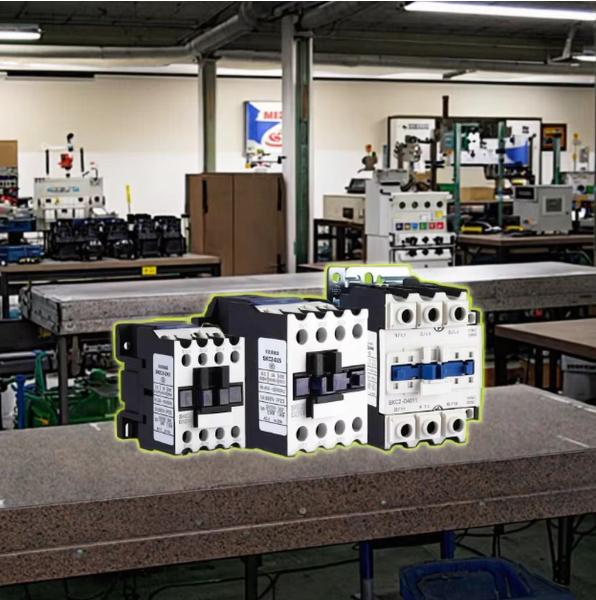
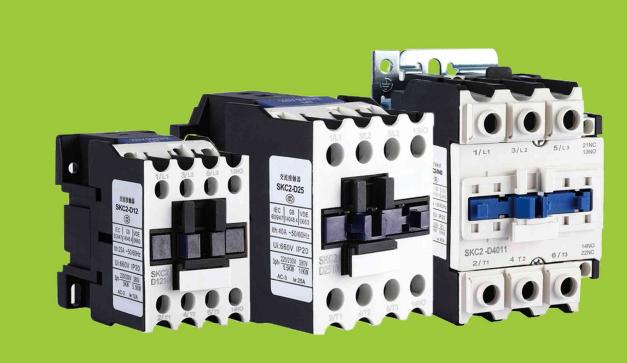
Motor control and protection: Motors are the core power source in industrial production. Their starting, stopping, forward and reverse rotation, as well as fault protection all require the participation of relays. For instance, when a motor starts, a contactor (essentially a high-power relay) is used to control the on-off of the main circuit, a thermal relay provides overload protection, and a time relay realizes the delayed switching of star-delta starting (reducing the impact of starting current on the power grid). In machine tool equipment, relays can also achieve the forward and reverse rotation control of motors (such as the forward and reverse rotation of the spindle of a lathe and the switching of feed motion), and prevent short-circuit faults through contact interlocking.
Production line sequence control: In assembly line production, relays are used to achieve the sequential start and stop of equipment, ensuring the continuity of the production process. For instance, in a food packaging production line, the conveyor belt needs to be started first, followed by the filling equipment, sealing equipment, labeling equipment, and finally the detection equipment. Through the combination of time relays and intermediate relays, the start delay of each device is set to achieve sequential control of “start first and then stop”. In chemical production, relays control the heating, stirring, feeding and discharging sequence of reaction vessels. Meanwhile, the pressure and temperature inside the reaction vessel are monitored through pressure relays and temperature relays. When the parameters exceed the standard, the relevant equipment is automatically cut off to ensure production safety.
(2) Smart home and building automation fields
With the development of Internet of Things (iot) technology, relays have become core control components in smart homes and building automation, enabling “contactless control” and “remote operation”. Core applications include:
Home appliance and lighting control: In a smart home system, the relay module is the key to connecting wireless signals (Wi-Fi, Bluetooth, ZigBee) with home appliances. For instance, smart switches are equipped with built-in relays. Through instructions issued by mobile phone apps or voice assistants (such as Xiaoai and Tmall Genie), they can control the on and off of devices like lights, sockets, air conditioners, and TVS. The smart curtain realizes the automatic opening and closing of the curtain by driving the motor to rotate forward and backward through a relay. The smart door lock controls the electromagnetic switch of the lock body through a relay to achieve remote unlocking and the closing of the door lock after password unlocking.
Building security and fire protection interlocking: In office buildings, residential communities and other buildings, relays are used for the interlocking control of security and fire protection systems. For instance, when the smoke sensor or infrared alarm detects an abnormality, it triggers the relay to act, which in turn activates the sound and light alarm to sound the alarm, the elevator to make an emergency landing, the fireproof rolling shutter door to close, and the emergency lighting to turn on. In the fire protection system, relays can also control the start-up of sprinkler pumps and smoke exhaust fans, as well as the pressurization of fire hydrants, ensuring the evacuation of personnel and the needs of fire fighting in case of fire.
HVAC control: In the central air conditioning system of buildings, relays are used to control the start and stop of air conditioning units, adjust the speed of fans, and open and close solenoid valves. For instance, the temperature sensor detects the indoor temperature. When the temperature exceeds the set value, the controller triggers the relay to start the compressor and fan. When it drops below the set value, the power supply is cut off. In the fresh air system, the relay controls the start and stop of the fresh air fan and the adjustment of air volume, and at the same time, it links the on and off of the air purifier to improve the indoor air quality.
(3) Transportation sector
The electrical systems of transportation vehicles (automobiles, trains, ships, aircraft) are complex, and they have extremely high requirements for the reliability, vibration resistance, and high and low temperature resistance of relays. Core applications include:
Automotive electrical systems: Relays in automobiles are widely used in lighting control, starting systems, air conditioning systems, anti-theft systems, etc. For instance, the control of car headlights, turn signals and brake lights needs to be carried out through relays (automotive-specific relays have waterproof and anti-vibration characteristics) to prevent the switches from being directly subjected to large currents and burning out. In the starting system, the ignition switch triggers the starting relay, and the high-power contact of the starting relay connects the power supply of the starter, driving the engine to start (the working current of the starter can reach several hundred amperes, and a relay is needed to achieve small current control). In addition, the compressor clutch of the car air conditioning, the lifting motor of the electric doors and Windows, and the alarm device of the anti-theft system, etc., are all controlled and protected through relays.
Rail transit systems: The electrical control systems of high-speed railways, subways and other rail transit systems rely on relays to achieve signal linkage and safety protection. For instance, in the traction system of a train, relays control the start-up, speed regulation and braking of the traction motor. In the signal system, the detection signals of the track circuit are converted into control signals through relays to achieve the section blocking of the train (to prevent rear-end collisions). In the door control, the relay links the door switch motor and the safety lock to ensure that the doors open and close precisely when the train arrives at the station and remain locked during the train’s operation. In addition, relays are also used to control the air conditioning, lighting and ventilation systems of trains to ensure passenger comfort.
Electrical systems of ships and aircraft: The power system, navigation system and communication system of ships all require relay control. For instance, the start and stop of the main engine of a ship, the steering control of the steering gear, and the drive of deck equipment (cranes, anchor cranes) are all achieved through relays to control high-power equipment with low voltage, and they also have the characteristics of being waterproof and resistant to salt spray corrosion. In the avionics system of an aircraft, relays are used to control equipment such as engine start-up, landing gear retraction and extension, cabin air conditioning, and flight lights. They are required to have extremely high reliability (with extremely low fault tolerance) and the ability to withstand extreme environments (high and low temperatures, high altitudes, and strong vibrations).
(4) Power System and Energy Field
The power generation, transmission and distribution links of the power system have extremely high requirements for safety and stability. Relays, as core control and protection components, ensure the reliable operation of the power grid.
Transmission and distribution line control: In high-voltage transmission lines, relays (such as vacuum relays and SF6 relays) are used for closing and opening control of the lines. The dispatching center triggers the relays to act through remote signals, achieving remote control of the transmission lines. In distribution transformers, relays are used for overload protection and gas protection (for oil-immersed transformers). When an overload or internal fault occurs in the transformer, the relay quickly cuts off the power supply to prevent the fault from expanding.
Substation automation: Substations are the “hubs” of the power system, and their automatic control relies on a large number of relays. For instance, the voltage relay monitors the bus voltage and triggers the voltage regulating device to act when the voltage is too high or too low. The current relay monitors the line current to achieve overcurrent protection. Time relays are used in reclosing devices (after a line fault trips, they automatically close after a delay to enhance power supply reliability). In addition, relays are also used in the control of reactive power compensation devices in substations. By switching capacitor banks, they regulate the power factor of the power grid and reduce energy consumption.
New energy power generation systems: In new energy power generation systems such as photovoltaic and wind power, relays are used for circuit switching and safety protection. For instance, the grid-connected/off-grid switching between photovoltaic inverters and the power grid needs to be achieved through relays. When a power grid failure occurs, the relay quickly cuts off the grid-connected circuit to prevent the photovoltaic system from transmitting fault current to the power grid. In wind power systems, relays control the start and stop of wind turbines, the direction of the yaw system (tracking wind direction), and at the same time, overcurrent relays protect generators to prevent overload operation when wind speeds are too high.
(V) Electronic equipment and communication field
In precision equipment such as consumer electronics, communication devices, and medical electronics, relays are mainly used for signal conversion, circuit isolation, and control. Core applications include:
Consumer electronics control: In household appliances such as televisions, washing machines and refrigerators, relays are used for power switching, mode switching and fault protection. For instance, the start and stop of the water inlet valve, the drain pump and the motor of the washing machine are controlled by relays to achieve the program linkage of washing, rinsing and dehydration. The start and stop of the refrigerator’s compressor are controlled by a relay. When the temperature inside the box reaches the set value, the relay cuts off the power supply to the compressor. After the temperature rises again, it restarts. The power relay of the television set can achieve rapid switching between standby and on mode, reducing standby power consumption.
Communication equipment signal switching: In communication devices such as routers, switches, and base stations, relays are used for signal link switching and lightning protection. For instance, in base station equipment, relays are used to switch radio frequency signals (such as primary and backup link switching), ensuring the continuity of communication signals. The relay in the router is used for lightning protection of the Ethernet port. When struck by lightning, the relay quickly short-circuits to discharge the lightning current, protecting the internal chips of the device. In data centers, relays are also used for redundant switching of server power supplies. When the main power supply fails, it quickly switches to the backup power supply to ensure that data is not lost.
Medical electronic equipment control: Medical electronic equipment (such as ventilators, electrocardiogram machines, and ultrasound diagnostic instruments) has extremely high requirements for electrical safety and stability. Relays are used for circuit isolation and precise control. For instance, in a ventilator, relays control the opening and closing of the airflow valve and the adjustment of the oxygen delivery volume. Isolation relays are used to prevent electrical interference between the control circuit and the patient’s contact circuit, ensuring patient safety. In an electrocardiograph, relays are used for signal switching (such as switching between different leads) to ensure the precise collection of detection signals. In the power supply system of medical equipment, relays are also used for overload protection and leakage protection to prevent equipment failures from causing harm to medical staff and patients.
(6) Agriculture and security fields
Agricultural automation control: In modern agriculture, relays are used in irrigation systems, greenhouse control, and the automation control of breeding equipment. For instance, in a greenhouse, a humidity sensor detects soil moisture. When the humidity drops below the set value, a relay triggers the water pump to start, achieving automatic irrigation. The temperature sensor controls the on and off of the heating lamps and ventilation fans to maintain a constant temperature and humidity inside the greenhouse. In aquaculture, relays control the start and stop of aerators (automatically starting when the dissolved oxygen in the water is insufficient) and the timed feeding of feeders, thereby enhancing the efficiency of aquaculture.
Security monitoring system: In security systems, relays are used for the linkage between alarm devices and actuators. For instance, when infrared beam detectors and door and window magnetic sensors detect illegal intruders, they trigger relay actions, which in turn trigger sound and light alarms, surveillance cameras to record videos, and access control systems to lock. In important places such as banks and museums, relays can also be linked to the fire protection system and emergency passage doors. When an emergency occurs, they will automatically open the emergency passage and simultaneously cut off unnecessary power sources.
Post time: Dec-09-2025