

Switch sockets are fundamental terminal components in electrical systems that connect power sources to electrical equipment. They are also core supporting products for building power distribution, industrial production, and domestic electricity usage. They mainly perform two core functions: circuit on-off control and power connection to electrical equipment. They also feature safety protection, convenient use, and scene adaptability. It is installed on walls, floors or cabinets, and is suitable for all scenarios such as household, commercial and industrial use. It has clear functional division and diverse types, and is a key component for ensuring electrical safety and convenience. At the same time, it must comply with mandatory safety standards such as national standards GB 16915 and GB 2099.
The core function of a switch is to control the on and off of circuits. By operating components such as buttons, rocker plates, and knobs, it can turn on and off the power supply at the power consumption ends of lamps, household appliances, industrial equipment, etc. Some high-end switches can also achieve extended functions such as multi-level regulation, delayed on and off, and remote control. According to the control object and method, the functions of switches can be divided into basic types and extended types: Basic rock-top switches and push-button switches are mainly used for single-channel or dual-channel control of household lighting and shopping mall lamps, achieving one-click on/off, and are the most commonly used categories. Intermediate switches and dual-control/multi-control switches can control the same appliance from multiple positions, making them suitable for scenarios such as living rooms, bedrooms, and corridors that require multi-point control. Time-delay switches and sound-controlled and light-controlled switches are mostly used in public areas such as corridors and restrooms to turn off lights when people leave and automatically sense on and off, achieving energy-saving effects. Explosion-proof switches and waterproof switches in industrial scenarios, on the basis of on-off, have added safety protection functions for special environments to prevent circuit short circuits from causing danger. In addition, modern smart switches can be connected to smart home systems, enabling remote control via mobile phones, voice control, and scene linkage, making electricity usage control more convenient.
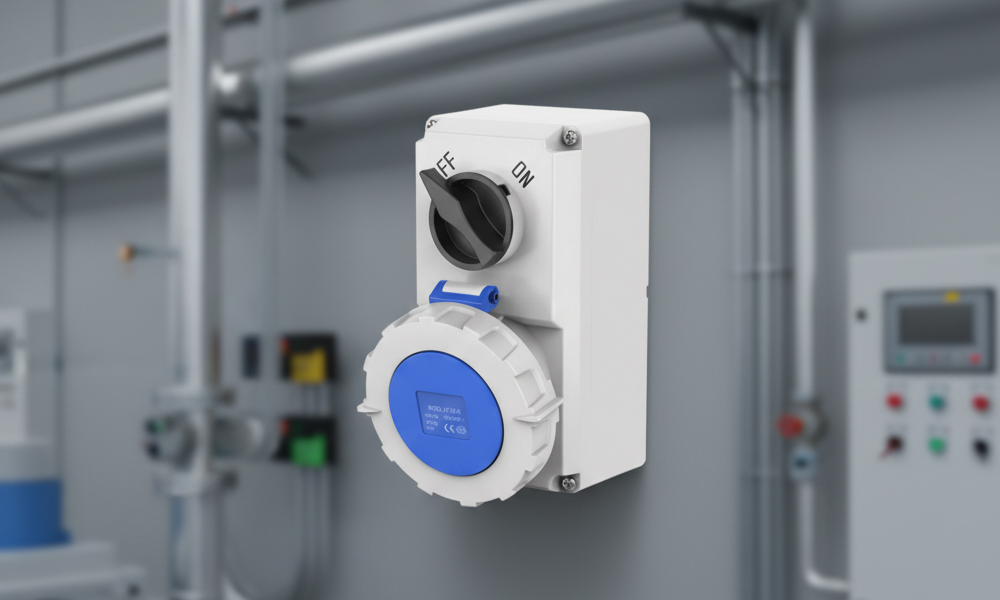
The core function of a socket is to provide a power connection interface. Through the coordination of sockets and plugs, it transmits power from the power grid to various electrical devices, serving as a bridge between electrical devices and power supply lines. Its functional design focuses on compatibility, safety, and universality. Basic sockets are classified into two-hole, three-hole and five-hole types based on their socket specifications. They are respectively suitable for two-pin, three-pin plugs and universal scenarios that take into account both types of plugs, meeting the connection needs of different household appliances such as mobile phone chargers, refrigerators, air conditioners and washing machines. The grounding hole of the three-hole socket can conduct the leakage current from the device casing into the ground, preventing electric shock accidents. It is an essential compatible component for high-power appliances with metal casings. According to the usage scenarios, the functions of sockets are further subdivided: Sockets with switches can directly control the power on and off of the socket, eliminating the need for repeated plugging and unplugging of the plug, extending the lifespan of the plugs and sockets of household appliances, and are compatible with commonly used devices such as TVS and routers. Waterproof sockets and splash-proof box sockets have added a sealed protective structure, which is suitable for damp environments such as kitchens, bathrooms, and outdoors to prevent water vapor from entering and causing short circuits. Industrial aviation sockets and explosion-proof sockets feature high voltage resistance, impact resistance and explosion prevention, making them suitable for power supply to high-power equipment in special scenarios such as factory workshops, mines and chemical plants. In addition, the multi-functional socket with a USB interface integrates a charging function, which can directly charge digital products such as mobile phones and tablets, eliminating the need for chargers and enhancing the convenience of use.
In addition to its core functions, switch sockets also have the basic function of electrical safety protection, which is an essential attribute for all categories. High-quality switch sockets are made of flame-retardant and high-temperature resistant materials inside. They are not easy to burn when exposed to open flames, preventing fires caused by circuit overload. The copper parts are made of high-purity tin-phosphor bronze, which features good electrical conductivity, oxidation resistance and wear resistance, avoiding the generation of electric sparks due to poor contact. The design of the child protection door can prevent children from accidentally touching the socket and getting an electric shock. It is a standard configuration for household sockets. Some high-end products also feature overvoltage, overcurrent and lightning protection functions. They can automatically cut off the power supply when the grid voltage is abnormal or a lightning strike occurs, ensuring the safety of electrical equipment.
The functional design and category selection of switch sockets should be highly matched with the usage scenarios: In household scenarios, convenience, safety and appearance are emphasized, and five-hole universal sockets, dual-control switches and sockets with USB are often chosen. In commercial scenarios such as shopping malls and office buildings, durability and versatility are emphasized, and high-current sockets and multi-point control switches are chosen. In industrial scenarios, the focus is on adaptability to special environments, and dedicated switches and sockets that are explosion-proof, waterproof, and high-voltage resistant are selected. As the “last mile” of the electrical system, the functional practicality and safety of switches and sockets are directly related to the daily power usage experience and safety. Their quality and selection are important considerations for building power distribution and equipment power usage.
Post time: Feb-03-2026