

The plug is a core interface component in electrical and electronic systems that realizes power transmission, signal connection, safety isolation and convenient on-off. It is widely used in households, offices, industries and mobile devices, and is a key node in the power and signal link. With a standardized structure, reliable conductivity and multiple safety designs, it ensures the stable operation of the equipment and the personal safety of users. Despite its small size, it undertakes multiple core functions such as connection, transmission, protection and adaptation.
The primary function of a plug is to reliably transmit electrical energy and signals. As a “power bridge”, the power plug precisely contacts the socket through copper alloy pins, forming a closed circuit that stably supplies mains electricity to electrical appliances, meeting the power demands of various power devices ranging from mobile phones and table lamps to refrigerators and air conditioners. Meanwhile, audio, video, USB, RJ45 and other signal plugs can transmit sound, image and data signals, achieving interconnection and interoperability among devices, and supporting functions such as audio and video playback, network communication and data interaction. The conductive components are made of high-purity copper and treated with gold and tin plating to reduce contact resistance and heat generation risk, ensuring transmission efficiency and stability.
Safety protection is one of the core functions of a plug. Household plugs are divided into two types: two-pole ungrounded and three-pole grounded. Two-pole plugs are suitable for low-power, double-insulated electrical appliances and have a simple structure. The three-pole plug is equipped with a grounding electrode. When the electrical appliance’s casing leaks electricity, the current can be quickly conducted to the ground, preventing electric shock accidents. The new national standard GB 1002-2024 mandatolily requires that insulating sheaths be added to live pins to reduce the risk of electric shock during plugging and unplugging. The shell is made of flame-retardant and high-temperature resistant insulating materials, which are not easy to burn and deform in case of short circuit or overload, preventing the spread of fire. Some industrial and British standard plugs are equipped with built-in fuses. When the current is abnormal, they automatically melt to cut off the circuit and protect the equipment and lines.
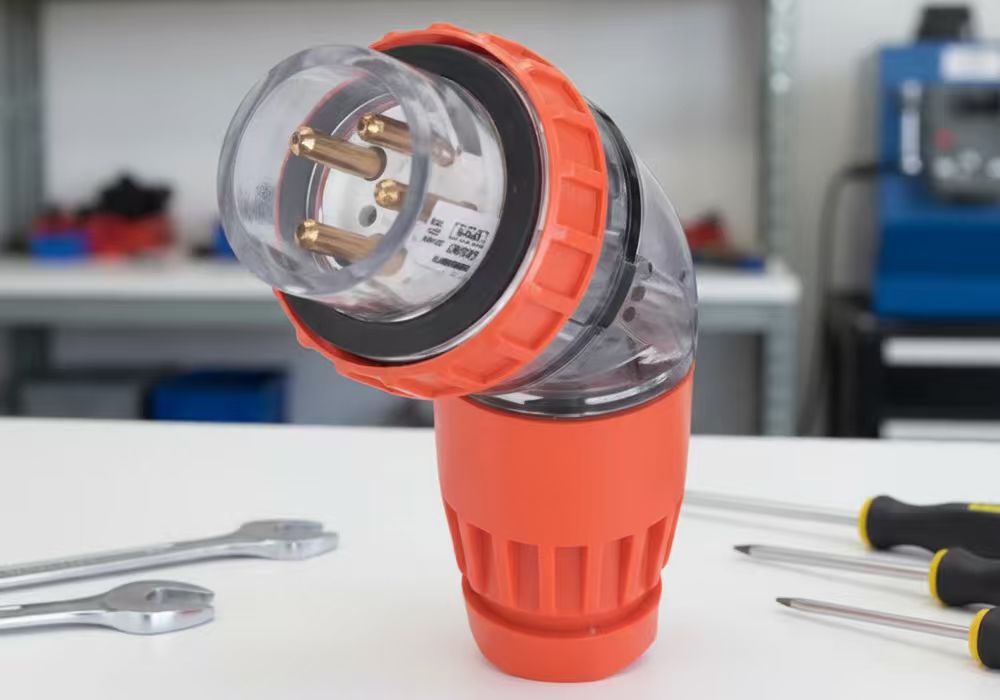
The plug is equipped with standardized fitting and anti-misinsertion functions. Each region around the world formulates its own standards, such as the Chinese national standard for flat pins, the European standard for round pins, the American standard for two flat pins and one round pin, and the British standard for three-pin pins, etc. The dimensions and polarities are strictly regulated to prevent short circuits and equipment damage caused by incorrect insertion of plugs of different specifications. The grounding electrode of the household three-pole plug is longer, achieving “grounding first, then power on”, further enhancing the safety factor. Industrial plugs are designed based on voltage, current and pole number classification, and can only be matched with corresponding sockets to eliminate the risk of incorrect connection and meet the power usage requirements of different scenarios.
The convenient on-off and maintenance functions make electricity usage more flexible. The plug can be plugged and unplugged at any time, enabling quick connection or disconnection between electrical appliances and power sources. Devices can be deactivated or moved without complex operations, facilitating daily use, cleaning and maintenance. Compared with fixed wiring, the plug-in design reduces installation difficulty. Ordinary users can independently complete equipment deployment, enhancing the convenience of electricity usage. Meanwhile, standardized specifications enable the same type of equipment to be universally interchangeable, reducing redundant parts and lowering usage costs.
In addition, the plug also features mechanical protection and durability. The shell and internal structure have sufficient mechanical strength to withstand external forces such as plugging and unplugging, dropping, and squeezing, and are not prone to breakage or damage. The pins have undergone bending resistance tests and will not deform or loosen over long-term use, ensuring good contact. The application of high-temperature resistant and aging-resistant materials enables the plug to operate stably in complex environments such as humidity and high temperatures, thereby extending its service life.
From daily household appliances to industrial equipment, from digital products to communication devices, plugs, with their four core functions of transmission, protection, adaptation and on-off, have become indispensable basic components of modern electrical systems. With the implementation of the new national standards and technological upgrades, plugs have been continuously optimized in terms of conductivity efficiency, safety protection, and environmentally friendly materials. They support the stable operation of various devices in a more reliable, safer, and smarter form, safeguarding the safety of electricity usage in production and daily life.
Post time: Mar-10-2026