

Cables are carriers for transmitting electrical energy or signals, composed of single or multiple conductors, insulation layers, shielding layers, and sheaths, etc. They are widely used in power transmission, communication networks, industrial control, smart homes and other fields, and are an important component of the “blood vessels” and “nerves” of modern society.
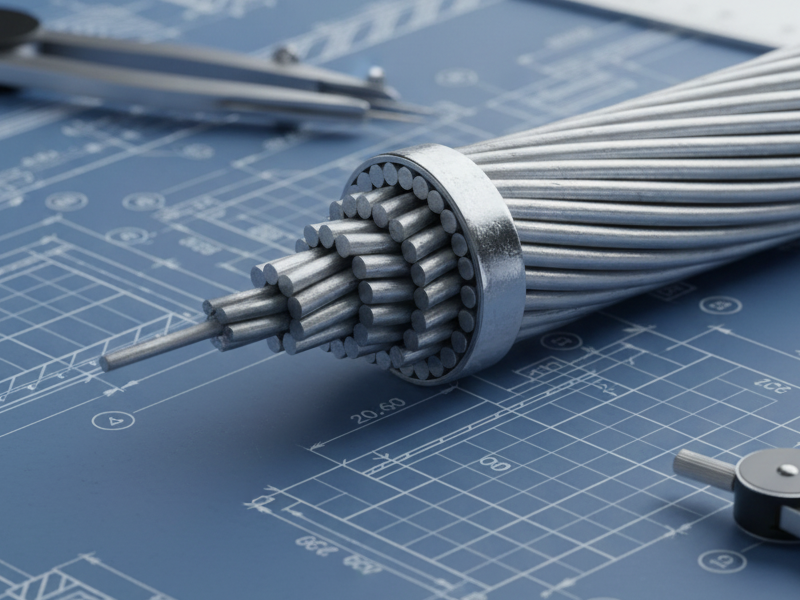
From a structural perspective, the core of a cable is the conductor, with copper or aluminum being the commonly used materials. Copper conductors, due to their excellent electrical conductivity and low resistivity, have become the preferred choice for power and communication cables. Aluminum conductors are mostly used in long-distance high-voltage transmission lines due to their low cost. The conductor is wrapped with an insulating layer, which is mostly made of materials such as polyvinyl chloride (PVC), polyethylene (PE), and cross-linked polyethylene (XLPE). Its function is to isolate the current, prevent leakage, and ensure the safety of electricity usage. For scenarios that require anti-interference, shielding layers are added to the cables, using materials such as copper mesh and aluminum foil, which can effectively block the interference of external electromagnetic signals on the transmitted content. This is commonly seen in high-frequency signal cables such as network cables and data cables. The outermost sheath serves a protective function, resisting external mechanical wear, chemical corrosion, humid environments, etc., thereby extending the service life of the cable.
The functions of cables can be divided into two core categories. The first is the function of power transmission. This type of cable is called power cable and is responsible for the power transmission from power stations to substations and then to thousands of households. High-voltage power cables can achieve long-distance and low-loss power transmission, ensuring the electricity demands of industrial production and residents’ daily lives. Low-voltage power cables are mostly used for internal wiring in buildings and connection of household appliances, serving as the terminal carriers of the power system.
The second is the signal transmission function. This type of cable includes network cables, optical fiber patch cords, coaxial cables, etc. Network cables are the foundation of computer networks. They enable data interaction between devices by transmitting electrical signals and support Internet communication, enterprise local area network construction, etc. Coaxial cables are often used for the transmission of cable TV signals and surveillance video signals, featuring strong anti-interference ability and stable transmission. Optical fiber cables use optical signals as the transmission medium, featuring high transmission speed, large capacity and extremely low loss. They are the core carriers of 5G communication, data centers and long-distance trunk communication, driving the rapid development of the information age.
In addition, the cable also has the function of adapting to specific scenarios. For instance, fire-resistant cables can still maintain normal power supply for a period of time during a fire, buying time for personnel evacuation and fire-fighting operations. Anti-rat and anti-ant cables are suitable for outdoor, underground and other environments, which can prevent the cables from being damaged by biological gnawing. Flexible cables are used in industrial robots, medical devices and other equipment that need to be bent frequently, meeting the requirements of flexible movement.
As a key link for energy and information transmission, the quality and performance of cables are directly related to the stable operation of various systems and are indispensable important products in modern infrastructure construction.
Post time: Jan-27-2026