

Busbar, also known as busbar, is a standardized conductive component processed from high-conductivity metal materials (mainly copper bars, aluminum bars or copper-aluminum composite bars), and is widely used in the collection, distribution and transmission of electrical energy in power distribution systems. Compared with traditional cable wiring, busbars have become the core carrier for power transmission in fields such as industrial automation, power distribution, and new energy, thanks to their advantages of large current-carrying capacity, low loss, and convenient installation and maintenance. Their design and selection directly affect the stability and safety of the entire power supply system.
From the perspective of product classification, busbars can be divided into diversified categories based on dimensions such as material, structure, and application scenarios. Classified by material, copper busbars have excellent electrical conductivity and strong oxidation resistance, making them the preferred choice for medium and high-voltage distribution systems and power supply for precision equipment. Aluminum busbars are cost-effective and lightweight, making them suitable for scenarios with low voltage and high current, where cost control is strictly required. Copper-aluminum composite busbars combine the advantages of both, taking into account both conductivity and economy, and are mostly used for transitional connections in high and low voltage distribution cabinets. Classified by structural form, they can be divided into solid busbars, hollow busbars and special-shaped busbars. Solid busbars are easy to process and have high mechanical strength, making them suitable for fixed installation in power distribution scenarios. Hollow busbars have outstanding heat dissipation performance and are often used in industrial equipment that operates continuously under high loads. The irregular busbars are customized in shape according to the equipment interfaces to meet the power transmission requirements of non-standard equipment such as new energy vehicle battery packs and photovoltaic inverters. Classified by application scenarios, it can be further subdivided into distribution cabinet busbars, photovoltaic busbars, new energy vehicle busbars, etc. Different categories have differentiated design standards in terms of dimensional accuracy, insulation grade, and anti-corrosion performance.
In terms of technical features and core advantages, the performance parameters of the busbar directly determine its applicable scope. Current-carrying capacity is a core indicator. The current-carrying capacity of copper busbars is usually 1.2 to 1.5 times that of aluminum busbars of the same specification, and they have lower heat loss during long-term operation. In terms of mechanical strength, high-quality busbars can maintain structural stability after cold bending, punching and other processing, and can withstand electromagnetic impact forces during short-circuit faults. In terms of insulation protection, the surface of the busbar is treated by spraying insulating paint, covering with heat shrink tubing, and wrapping with an insulating shell, etc., to prevent potential safety hazards such as leakage and creepage. Some industrial-grade busbars also have a protection level of IP65 or above, allowing them to be used in harsh environments with high humidity and dust. In addition, the busbar adopts a modular design, which can be flexibly spliced and expanded according to the power distribution requirements. Compared with cable wiring, it significantly shortens the installation period and reduces the difficulty and cost of later maintenance.
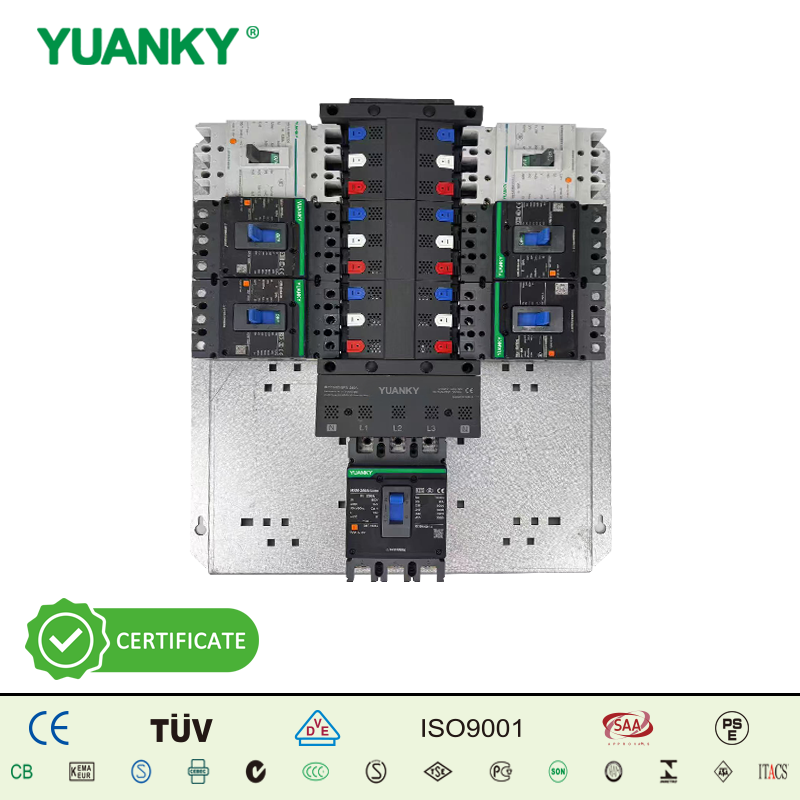
In practical application scenarios, the uses of busbars cover the entire chain from low-voltage terminal distribution to high-voltage transmission. In the field of industrial automation, the incoming power supply is distributed to each branch circuit breaker through busbars inside the distribution cabinet and control cabinet, providing power for motors, frequency converters, PLCS and other equipment, ensuring the stable operation of the production line. In the field of new energy, photovoltaic power stations collect the direct current generated by multiple photovoltaic modules through the busbars in the photovoltaic combiner boxes and then send it to the inverter, improving the efficiency of power collection. The busbars in the battery packs of new energy vehicles are responsible for the series and parallel connections between battery cells, achieving efficient power transmission and management. In commercial buildings and civil power distribution, the distribution rooms of office buildings and shopping malls adopt busbars instead of traditional cable trays. This not only saves distribution space but also enhances the safety and aesthetics of the power supply system. In the field of data centers, high-density server cabinets are powered by busbar busbars, which can achieve rapid expansion and hot-swapping, meeting the high reliability and high flexibility power demands of data centers.
With the development of power electronics technology, the research and development direction of busbars is moving towards lightweight, intelligence and high integration. New composite material busbars are gradually emerging, further reducing weight while ensuring electrical conductivity. The intelligent busbar integrates temperature sensors and current monitoring modules, enabling real-time upload of operational data and achieving digital monitoring and early warning of the power distribution system. In the future, with the rapid development of industries such as new energy and intelligent manufacturing, busbars, as key components for power transmission, will play an even more significant role in building an efficient and reliable new power system.
Post time: Jan-13-2026